Patient Management Software Development Guide: Features, Process, Costs, and Best Practices


Today’s patient management software development solutions offer digital tools for automating and organizing tasks, from front desk and filing to accounting, billing, insurance, reporting, etc. Hospitals, clinics, and medical practices can use a patient management system to centralize administrative workflows, digitize paperwork, and enable file sharing, boosting productivity through analytics and feature customization.
But what is patient management software, or PMS, in laypeople’s terms? And how can it give leverage to particular healthcare startups or organizations? You are looking at the fullest guide to answer these and other relevant questions. Let’s get into it!
What is patient management software?
Patient management system software is a central tool and tasking dashboard for a healthcare provider that replaces paper files, manual calendar scheduling, chaotic spreadsheets, and external billing systems.
Core functions
- Appointment scheduling
Online booking, automated reminders and rescheduling, waitlist management, and AI calendar updates help structure the patient’s journey from check-in to follow-up. - Patient records management
Automatically updated, centralized patient records give authorized staff instant access to medical history, visit notes, diagnoses, medications, and treatment plans. - Billing and payment processing
PMS systems automate billing, insurance claims, invoicing, and payment tracking through integrated financial workflows. - Care coordination
Shared access to patient information, referrals, and treatment updates ties up collaboration between physicians, nurses, specialists, and administrative teams. - Communication and engagement tools
Patients get automated appointment reminders, secure messaging, digital forms, patient portals, and follow-ups.
Role in modern healthcare operations
PMS enables an entirely new level of care coordination and administrative efficiency, one that’s fully digitized, highly automated, and cost-/time-saving by design. Naturally, higher efficiency in clinical workflow management translates to better service quality and gradual improvements in the patient experience.
How it differs from EHR and EMR systems
Patient management software vs. EHR
The range of EHRs’ capabilities is narrowed down to health records—their storing and sharing, with some extra security settings at most.
In contrast, a patient management system helps with general practice management and operational workflows—file storage is only one of its features.
Patient management software vs. EMR
The purpose of an EMR is to digitize a patient’s medical chart, storing clinical documentation like diagnoses, medications, treatment notes, and lab results for different healthcare providers to refer to when treating the same person.
PMS complements an EMR by managing administrative processes, integrating patient communication (based on EMR records), and enabling billing management (which is recorded in the EMR).
Integration opportunities
Among the core benefits of patient management software is its ability to integrate with other systems for high-level healthcare interoperability.
A PMS system can combine diverse functionality and data access points through EHR integrations, EMR connectivity, and cross-operation with custom telemedicine platforms.
Types of patient management software
- Hospital patient management systems
Optimized for larger-scale facilities, a hospital PMS enables inpatient care management (from admissions to discharge planning and follow-ups), bed occupancy tracking, and an overview of clinical workflows. A hospital can use the PMS to coordinate care in different departments and track patients.
- Clinic management software
PMS for clinics is usually medium-scale and oriented toward private practices, medical offices, and outpatient clinics that need access to medical records and appointment scheduling. It is commonly preferred for front-desk tasks, such as patient registration and billing administration.
- Specialty practice management software
PMS for small- to mid-scale practices are frequently tailored to specialty-specific workflows, e.g., cardiology, dermatology, dentistry, orthopedics, behavioral health, and other practices. A specialty PMS can help access specialized documentation and customize treatment planning, patient monitoring, and regulatory compliance based on industry.
- Multi-facility healthcare platforms
Larger-scale patient management platforms can be used to interconnect multiple medical facilities, enabling multi-site reporting, cross-location scheduling, and distributed resource management. Furthermore, multi-facility PMS allows you to standardize workflows and consolidate operations.
- Telehealth-enabled patient management systems
Patient-focused systems of any scale can be integrated with telehealth platforms, or you can use a PMS to set up remote patient monitoring and virtual consultations from scratch. A richly integrated PMS can enable secure video conferencing (with all data logged and synced with patient profiles), live monitoring of chronic conditions, and digital patient engagement via self-care tools.
Key features of patient management software
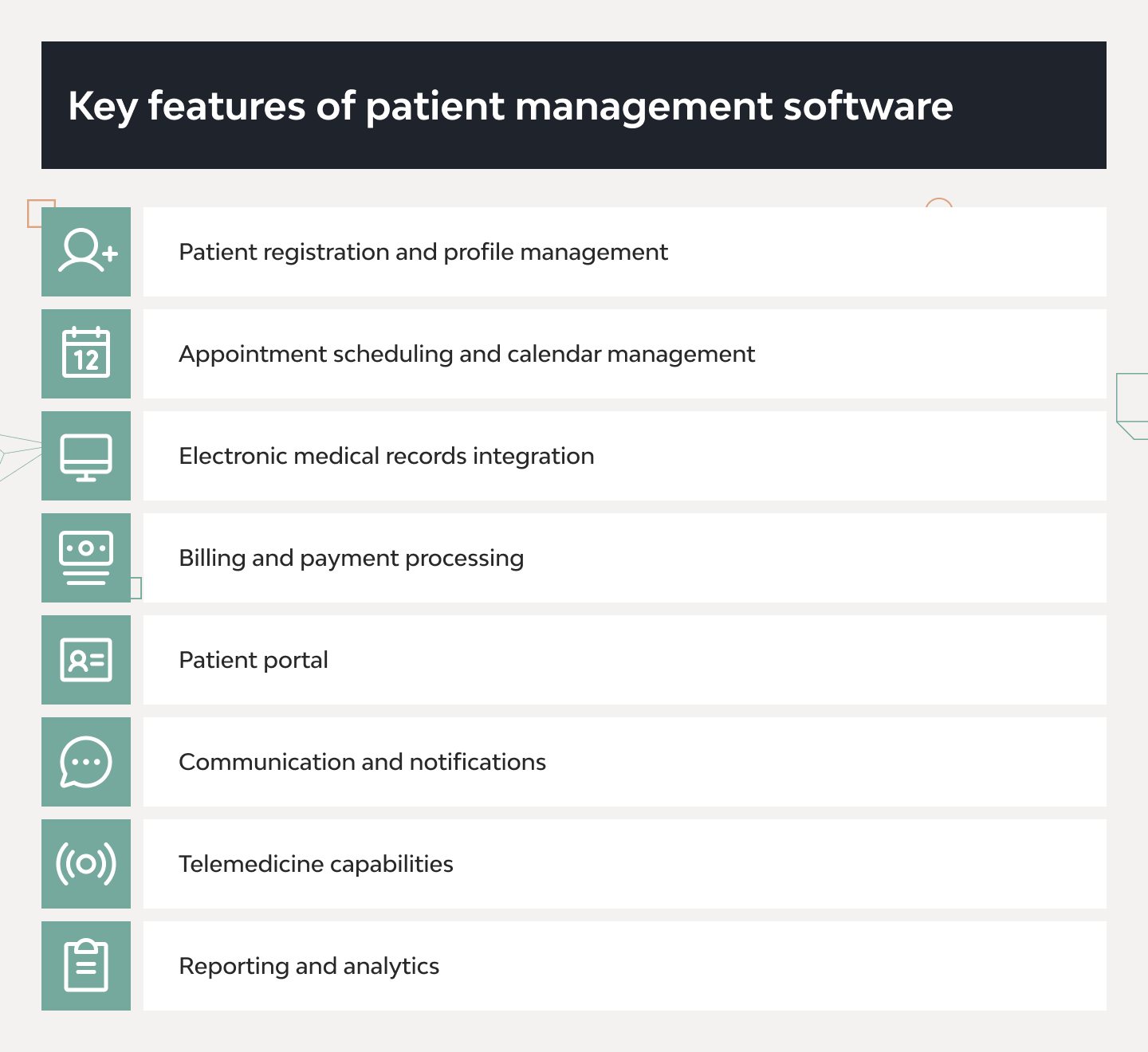
- Patient registration and profile management
PMS are perfect for front-desk operations and new patient onboarding, with digital intake forms that capture demographic and insurance information, consent forms, and general medical history. They also enable more insightful medical history management, with patient profile updates based on EHR datasheets, EMR charts, and information from other sources of truth.
- Appointment scheduling and calendar management
Features of a modern patient management system enable online appointment booking followed by automated scheduling, custom waitlist management, and provider calendar coordination. A PMS patient portal offers self-service tools for simple booking, rescheduling, and canceling of appointments.
- Electronic medical records integration
PMS can support interoperability support, readily integrating with external EMRs for direct access to treatment records and updates. This allows medical specialists to browse clinical documentation without switching systems, thanks to end-to-end data synchronization.
- Billing and payment processing
PMS offers features for patient insurance and payroll of service fees. Healthcare providers commonly use PMS systems for automated insurance verification (e.g., via KYC/AML integrations), invoice generation (via data integration and AI), claims management (via patient portal), and online payments (via integrated gateways).
- Patient portal
A dedicated user portal gives patients secure account access, the ability to make quick prescription requests, and convenient medical record viewing. At the same time, it gives medical specialists a single source of patient reference, which can be used for efficient appointment management and personalized care.
- Communication and notifications
Patient management system software helps keep everybody synced up, with automated appointment reminders, SMS and email alerts, and custom notifications in connected apps. PMS also enables secure messaging via data encryption integrations, while boosting the quality of interactions through a range of patient engagement tools (e.g., self-care, patient portal, and telehealth features).
- Telemedicine capabilities
For mobile care and remote patient monitoring, PMS systems support telemedicine functionality and on-demand digital care delivery. Namely, telemedicine can be enabled through connected apps, centralized EHR/EMR access, video conferencing integration, and virtual consultations.
- Reporting and analytics
Patient management system software’s data capabilities provide in-depth performance analytics, patient verification, and financial reporting. PMS enables auditability, boosting the security across the facility, with detailed operational dashboards and patient outcome tracking for transparency in case of disputes.
Benefits of patient management software
For healthcare providers
- Improved operational efficiency
PMS-enabled patient outlook, appointment management, and workflow automation contribute to an overall efficiency of critical tasks. Further optimize staff productivity and overall performance by allocating resources based on accurately reported workflow gaps and needs.
- Reduced administrative burden
PMS solutions make an admin’s life easier with patient intake automation, custom-structured task management, and paperless documentation. On top of that, automated billing and service logging help complete the full patient journey based on a single log of visits and treatment milestones.
- Better patient engagement
Patient portals engage users with self-service features that can make an in-person visit unnecessary. At the same time, personalized communication motivates better treatment adherence and multiplies overall patient satisfaction.
For patients
- Convenient appointment scheduling
Patients can book services and specialists online and use self-service scheduling for convenience. A PMS-wide calendar integration also enables user-based appointment reminders.
- Faster access to medical records
A secure patient portal centralizes all digital health records via real-time information access. Patients can instantly view their files, see the latest updates, and use record sharing to consolidate their treatment.
- Improved communication with providers
PMS enables patient-provider interactions through digital appointments, telehealth consultations, and direct secure messaging and file sharing. This enables two-way care coordination with highly accurate logging of treatment and medical service provision.
For healthcare administrators
- Resource optimization
Administrators can leverage a PMS system to rethink both facility utilization and workforce management, cutting out excessive actions and filling the gaps. With PMS-based capacity planning, an admin can analyze resource consumption in detail and direct it towards operational efficiency.
- Reduced no-show rates
Personalized patient notifications and automated reminders keep medical visitors on track, resulting in much reduced no-show rates. Administrators can further optimize scheduling with appointment confirmations, which help track patient shows and no-shows.
- Better reporting and analytics
PMS enables custom healthcare analytics with precise patient accounting, service logging, and operational reporting. Feature- and info-rich performance dashboards that you can set up provide a broad outlook of patient experiences and feed data-driven decision-making.
Patient management software development process
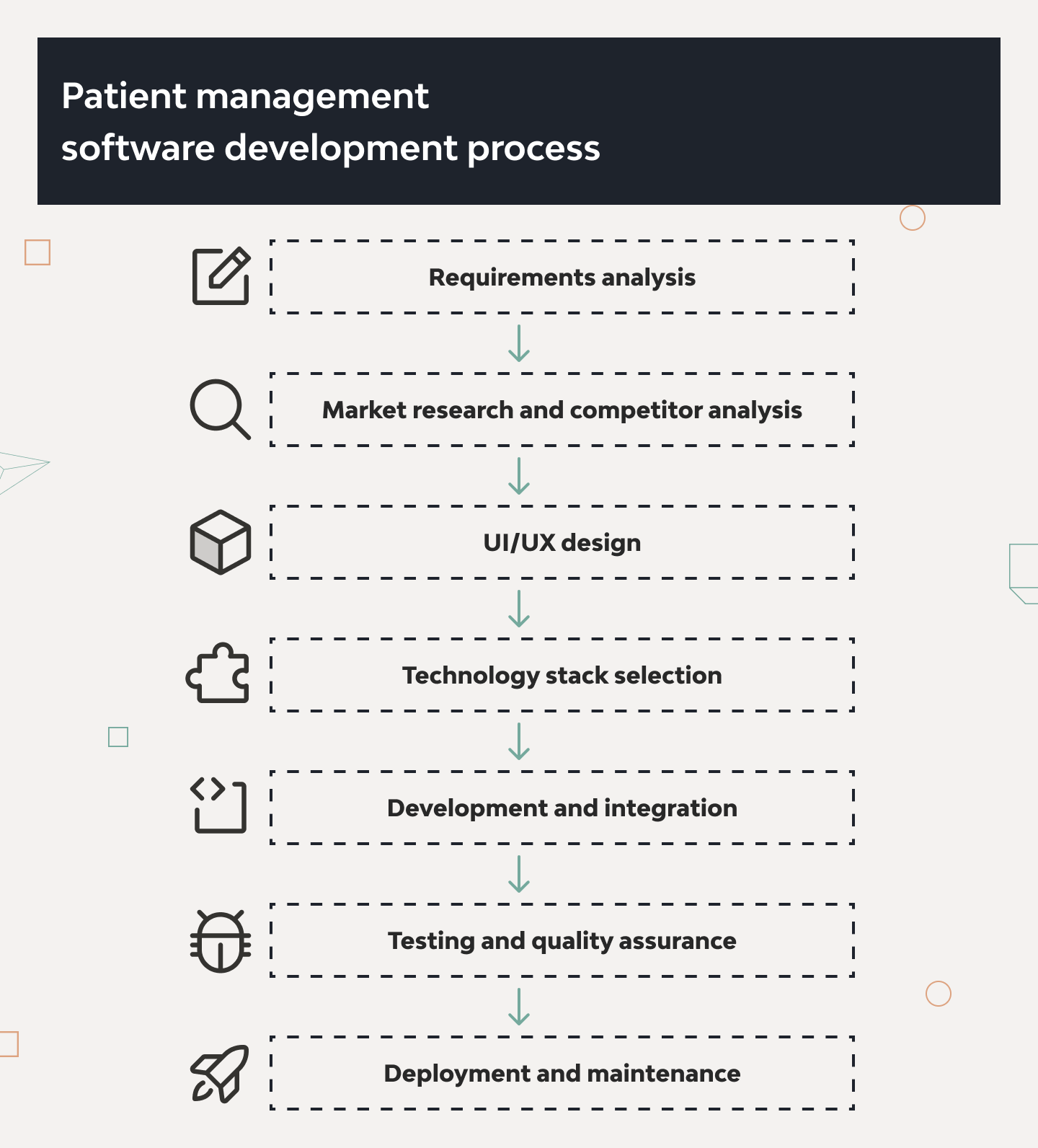
- Requirements analysis
The process of patient management software development starts with a user needs assessment, a summary of business goals, and additional requirements based on the niche you operate in. Healthcare workflows are very compliance-oriented, so extra attention must be paid to regulatory requirements and auditable operations.
- Market research and competitor analysis
To deliver a relevant PMS product that meets the market’s standards, software developers conduct competitor evaluation, industry trend analysis, and gap identification in existing healthcare operations. They also conduct feature benchmarking to tailor functionality and remove unnecessary capabilities.
- UI/UX design
Healthcare-specific design principles are used, and custom user journey mapping is carried out to structure a UI/UX that both invites and engages users from all sides. Given the nature of healthcare, accessibility considerations are a must, while more individual UI/UX features are chosen through interface prototyping and A/B testing.
- Technology stack selection
Patient management software developers pick frontend and backend technologies based on the requirements, UI/UX concept, and software architecture planning. This is also where they choose core platforms and database architecture, with options including on-premise deployment, cloud infrastructure, or a hybrid approach.
- Development and integration
This is the stage of laying down the software foundation with core module development, as well as expanding it through interoperability implementation. PMS developers can complement the main architecture with custom API development for handpicked third-party integrations.
- Testing and quality assurance
To polish the PMS solution and ensure it meets usability standards, developers conduct functional, performance, and security testing, followed by QA. For healthcare software, compliance validation is also required.
- Deployment and maintenance
The developed and tested software is deployed in the required environment (on-premise, cloud deployment, or hybrid), followed by post-launch monitoring and support. With continuous updates from the developers, you can achieve additional performance optimization in the running software.
Regulatory compliance and security requirements
- HIPAA compliance
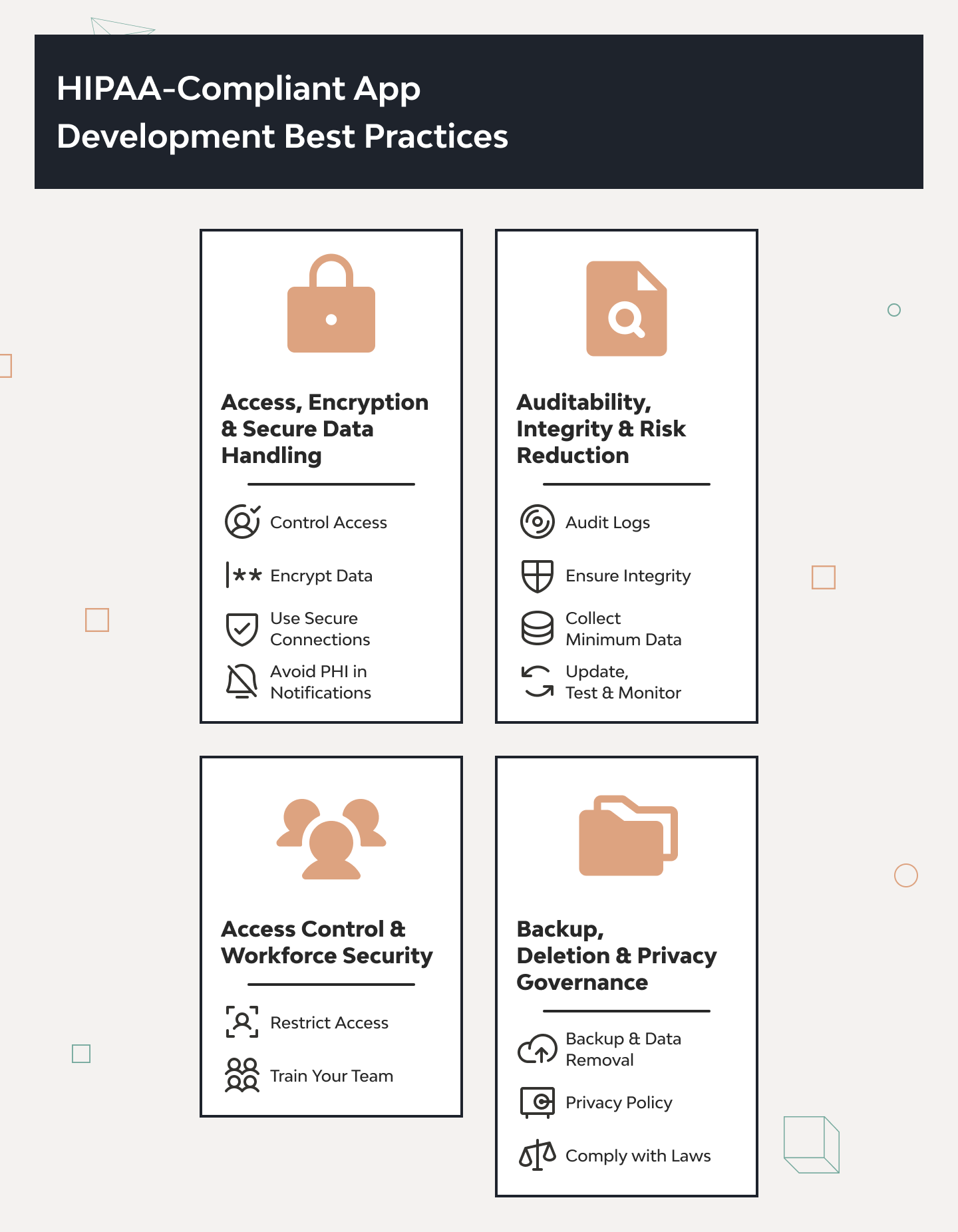
Patient management software must ensure healthcare data privacy for the regular flow of protected health information (PHI) passing through the system. To increase patient data protection, dedicated compliance monitoring is usually carried out under the HIPAA standard.
- GDPR compliance
To safeguard general personal information of patients (and other software users) across Europe, PMS must comply with data privacy regulations under GDPR. In particular, the PMS system must enable compliant personal data processing, data subject rights management, and consent management.
- Data encryption and security
HIPAA/GDPR compliance and general data safety can be achieved through a variety of cybersecurity measures, like end-to-end encryption, secure data transmission, and AI-based threat prevention.
- Role-based access control
To reinforce compliance and patient protection, implement data access management with user permissions and roles. The layered identity authentication enables the least privilege principle for patients, while admins get deeper access.
- Audit trails and logging
A PMS is very helpful for compliance auditing, with features like activity tracking, service logging and billing, and security monitoring. All the reports and user activity logs provide clear audit trails that can save a facility in case of a patient dispute.
- Secure data storage
To keep data safe, a patient management software system should provide storage that’s equipped with additional database protection mechanisms. These may include data backup and disaster recovery, both of which are best enabled through cloud security (the cloud can store lots of data while scaling flexibly).
Patient management software integrations
- Electronic Health Record systems
A PMS system can act as a central hub, enabling healthcare interoperability through 360-degree patient data synchronization. To do this, a PMS integrates with electronic health record (EHR) systems and sources accurate clinical documentation for existing patients.
- Payment gateways
Thanks to online payments integration, patients can complete a full healthcare journey remotely. A PMS connects with external insurtech and payment processing platforms for insurance payments and internal medical billing.
- Telemedicine platforms
Integration with telehealth apps and patient portals enables quick-access video conferencing and virtual consultations directly within the PMS. This also powers remote patient monitoring, which can help further improve the quality of digital healthcare services.
- Insurance verification services
A PMS can automate insurance coverage validation for patients by integrating eligibility verification and claims processing. Beyond that, the PMS can handle revenue cycles, digitizing healthcare insurance applications end-to-end.
- Laboratory information systems
Patient management software can be cross-integrated with your facility-adjacent laboratories to feed the latest medical test results through clinical workflows. You can instantly share lab tests and link diagnostic results to a patient profile.
- Pharmacy management systems
You can also link a new digital platform to the drug store’s inventory and use prescription tracking and user-linked medication updates. Both pharmacies and healthcare service providers can use e-prescribing to deliver just the right meds.
AI-powered capabilities in patient management software
- AI appointment scheduling
In PMS, AI can automate the booking of virtual or in-person doctor visits, with synced-up reminders for patients and specialists. Your admins can also optimize scheduling through no-show prediction and smart resource allocation (e.g., automated switches from busy doctors).
- Predictive patient risk analysis
AI’s prediction and outlier analysis improves care coordination through early disease detection, patient outcome forecasting, and preventive care recommendations. A more predictable outlook on medical events grants risk stratification and allows providers to approach complex treatments gradually.
- Clinical decision support
AI can generate relevant treatment recommendations using evidence-based insights from connected patient databases. This enables all-around care plan optimization and accurate diagnostic assistance.
- AI chatbots for patient support
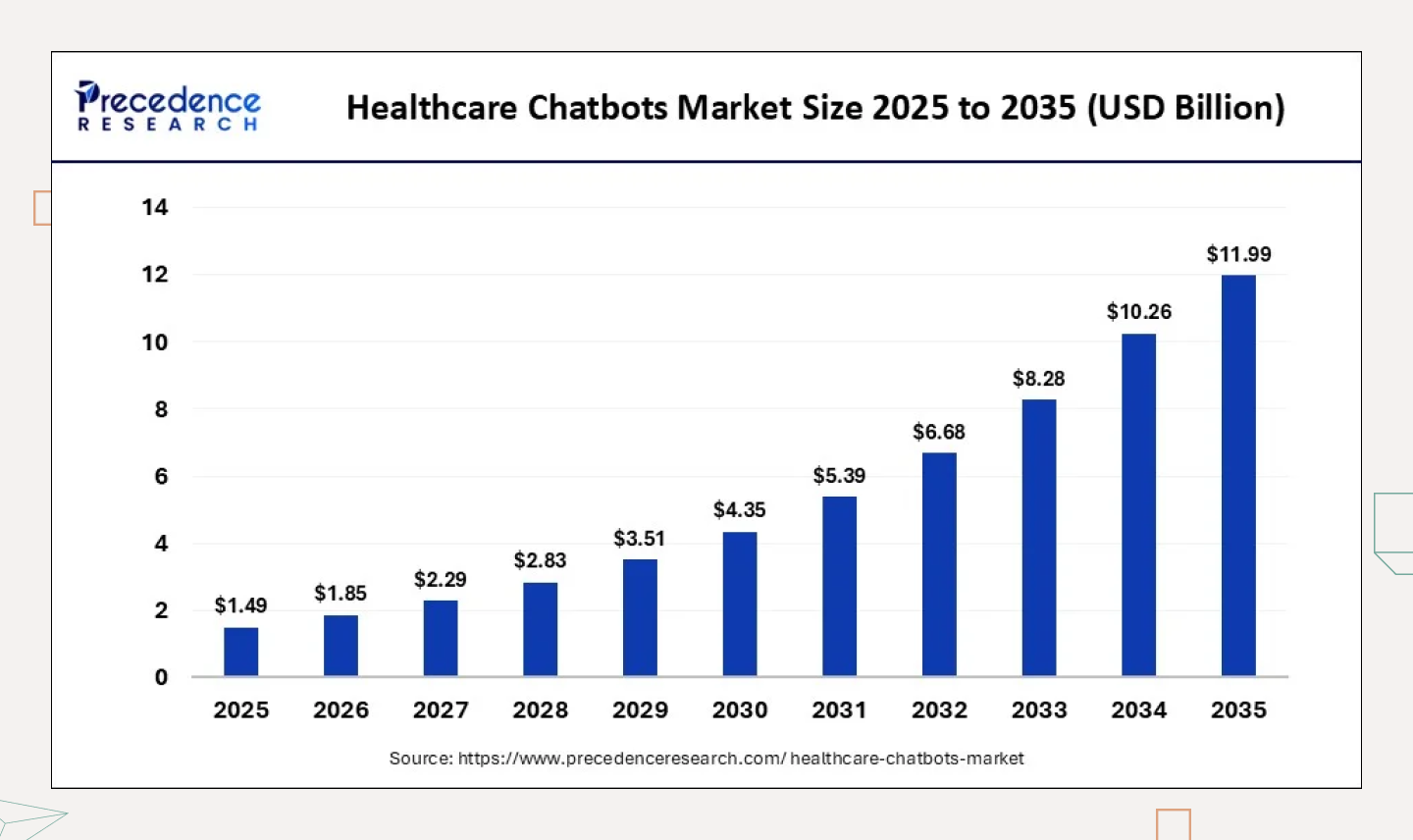
24/7 patient assistance, appointment management, and even real-time symptom assessment can all be delegated to virtual helpers powered by AI. Chatbots can generate automated responses to common queries and connect patients with live specialists.
- Automated documentation and medical notes
AI algorithms can take responsibility for clinical note generation, patient record summarization, and documentation automation. When a patient applies for healthcare services via a chatbot, their application can be instantly logged through AI-powered speech-to-text transcription.
- Personalized patient engagement
With insightful patient behavior analysis, a highly personalized communication can be achieved. AI’s continuous analysis also enables tailored health recommendations and individual care adherence support, boosting average CSAT scores.
Challenges in patient management software development
- Regulatory compliance complexity
No matter the technical complexity of patient management software, it must comply with a range of healthcare regulations and provide audit readiness. Staying in line with HIPAA requirements and maintaining GDPR compliance may require additional expertise.
- Legacy system integration
If a hospital, clinic, or private practice has been running on familiar but long outdated infrastructure, extra data migration and system compatibility configuration may be required. A bigger challenge is maintaining workflow continuity while implementing a newly migrated system.
- Data security risks
Healthcare software like PMS requires the most scrupulous patient data protection and safeguards against cybersecurity threats. The main challenges may include complex data encryption requirements, tiered user access control, and real-time security mechanisms.
- User adoption challenges
A new workflow adaptation for a finished PMS can turn into a challenge of its own due to usability concerns that you can’t cover at once. A new PMS will require staff training and change management to help new users start navigating the new platform and access all features intuitively.
- Interoperability issues
Dedicated skills and expertise may be required for EHR/EMR integration, system connectivity, and consistent data exchange. It’s important to build interoperability while supporting healthcare data standards and workflow continuity.
- Scalability requirements
An efficient PMS system should be able to adapt to growing patient volumes, support multi-location workflows, and leave room for future performance optimization. This may require custom integrations, refactoring, or implementation of cloud scalability.
Patient management software development cost
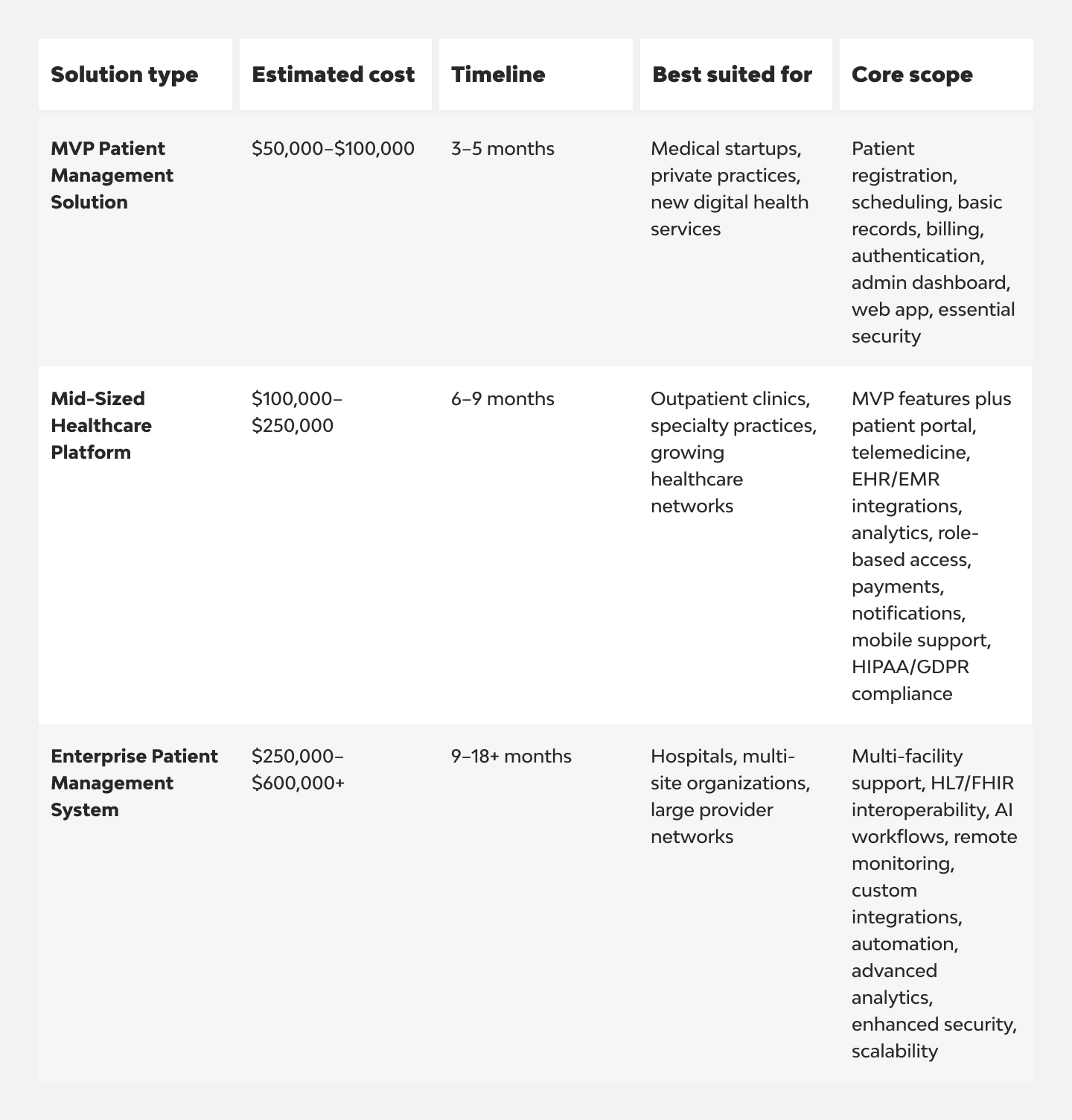
Typical cost ranges:
MVP Patient Management Solution
$50,000-$100,000
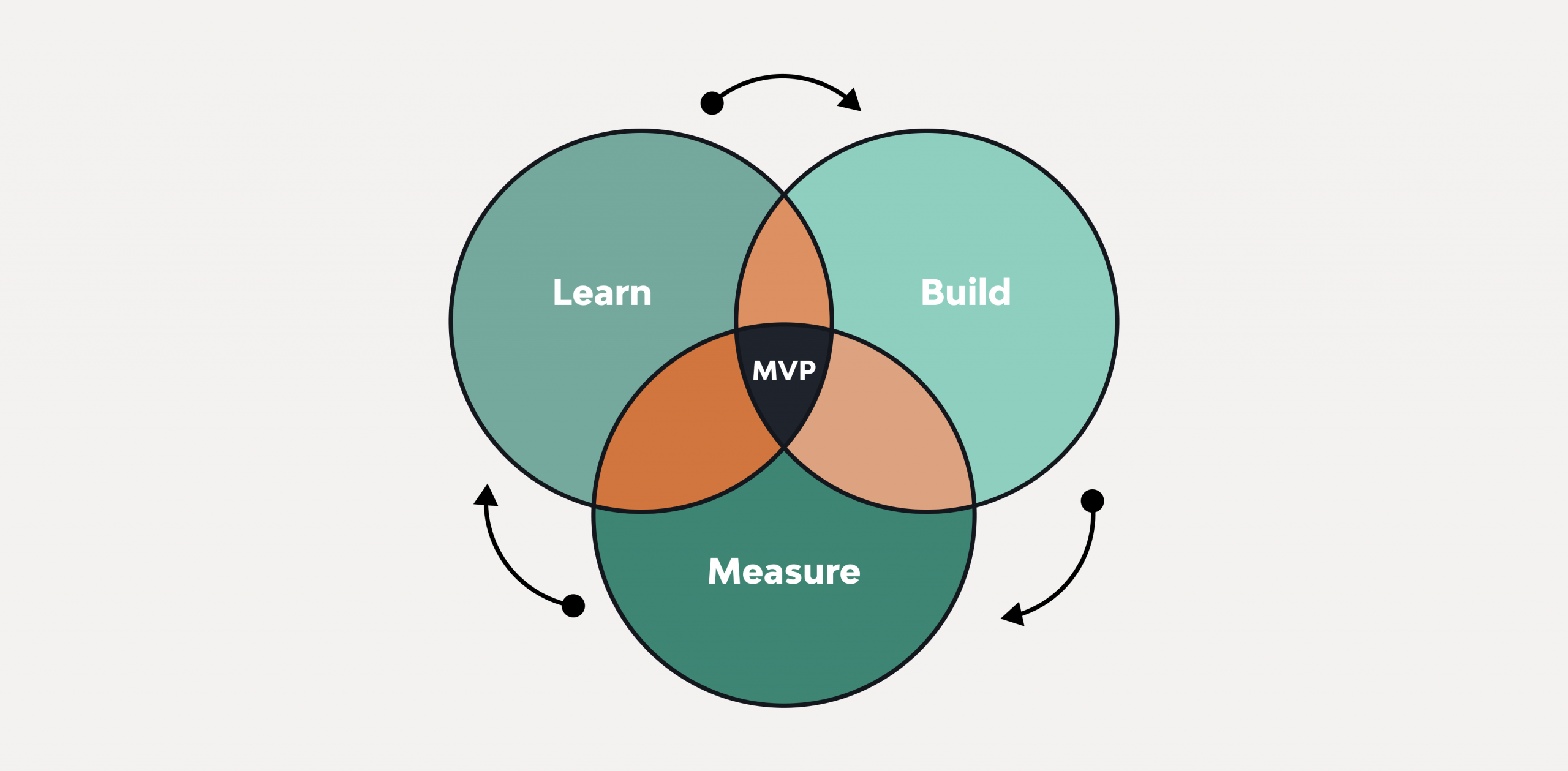
Includes patient registration, appointment scheduling, basic patient records, billing, user authentication, an admin dashboard, a web app, and only the essential security features. MVP helps validate intended functionality and expand the PMS later on, at lower scaling costs.
MVPs are best for medical startups, private practices, and organizations launching a new digital healthcare service. MVP versions can be completed in about 3-5 month.
Mid-Sized Healthcare Platform
$100,000-$250,000
Has everything in an MVP plus a patient portal, telemedicine and EHR/EMR integrations, reporting and analytics, user role-based access, payment processing, notifications, mobile support, and complete HIPAA/GDPR compliance.
Mid-sized PMS systems expand on the MVP base, taking 6-9 months to finish. Outpatient clinics, specialty practices, and growing healthcare networks commonly adopt them.
Enterprise Patient Management System
$250,000-$600,000+
Can feature multi-facility support, HL7/FHIR-compliant interoperability, AI-powered workflows, remote patient monitoring, custom integrations, task automation, in-depth analytics, reinforced security, and ongoing scalability.
An enterprise-grade PMS takes 9 to 18 months or longer to implement and is best suited for hospitals, multi-site healthcare organizations, and large provider networks.
Key cost factors:
- Feature complexity
The core functionality and custom features shape the bulk of the final PMS cost. Additional workflow automation and advanced modules raise the price.
- Number of integrations
The number of integrations with EHR/EMR systems, laboratory systems, payment gateways, etc., affects the cost. The more third-party APIs, the extra work a new PMS needs.
- Compliance requirements
Full HIPAA compliance and official fulfillment of GDPR requirements may require certifications. High-quality security controls and audit capabilities also add to the PMS cost.
- Platform type (web/mobile)
Feature-rich web applications are more expensive to implement than mobile apps. For full coverage, cross-platform development will add to the cost, requiring extra device compatibility.
- Customization level
The depth and level of custom workflows and UI/UX customization in a PMS are a major cost factor. Maintaining industry-specific requirements and enabling role-based access may need significant investment.
- AI and automation features
AI chatbots and the addition of other intelligent functionality, like predictive analytics, automated documentation, etc., can scale costs. AI can be expensive, but it usually pays off with efficient clinical decision support.
How to choose a patient management software development partner
- Healthcare industry expertise
First off, prioritize a vendor with healthcare domain knowledge and firsthand clinical workflow understanding. They will ensure regulatory awareness and leverage industry best practices.
- Compliance and security knowledge
Make sure your tech partner knows how to maintain HIPAA compliance and fulfill GDPR requirements. They must be skilled in secure software development and data protection.
- Interoperability experience
You will need EHR/EMR integrations, FHIR implementation, and HL7 compliance for interoperability. Seek skills in healthcare ecosystem connectivity.
- Custom development capabilities
Custom healthcare software solutions must run on a scalable architecture and allow for accessible workflow customization. Search for experience in flexible feature development and tailored solutions.
- Portfolio of healthcare projects
Comb through the developer’s portfolio for healthcare software experience and successful implementations. Look for a proven delivery record backed by standout case studies.
- Long-term support services
To gain a long-term partner, check for ongoing technical support and a system maintenance guarantee. A reliable software provider handles performance monitoring and makes the necessary feature enhancements.
Hire experienced developers to build your next project with DjangoStars