Healthcare ERP Solutions: Benefits, Core Modules, and Implementation Process

Healthcare ERP systems tie up workflows across facilities and departments, centralize data operations, and bring patients ever-closer to medical services that exceed their expectations. The enterprise-grade resource planning functionality can help automate healthcare service management and conduct operational optimization across the board.
As is well known, some healthcare offices have to manage thousands of patients and hundreds of employees; millions of dollars in supplies and service transactions; equipment; vendors; facilities—you name it.
But what is an ERP system in healthcare for your clinic, practice, or hospital network, and how exactly does it make things better? Let’s dig into it.
What is healthcare ERP software?
Healthcare ERP allows hospitals, clinics, private practices, and large-scale medical facilities to dedicate an entire system to enterprise data management. It comes with a range of capacity expansion opportunities and operational benefits. In particular, ERP platforms act as data hubs that consolidate and automate many related management routines.
Even more beneficially, ERP software connects the business side of a hospital or clinic into a single shared platform, where everyone can easily track finances, payroll, purchasing, inventory, scheduling, and reporting. With ERP, when supplies are purchased, staff are scheduled, invoices are paid, or budgets are updated, the information flows through a single system.
When complemented by AI, ERP software shines with automation that can handle a ton of administrative, managerial, and healthcare workflow operations. However, as fundamentally opposed to traditional digital medical systems, ERP solutions unify clinical workflows with patient-facing features.
Why healthcare providers need ERP solutions
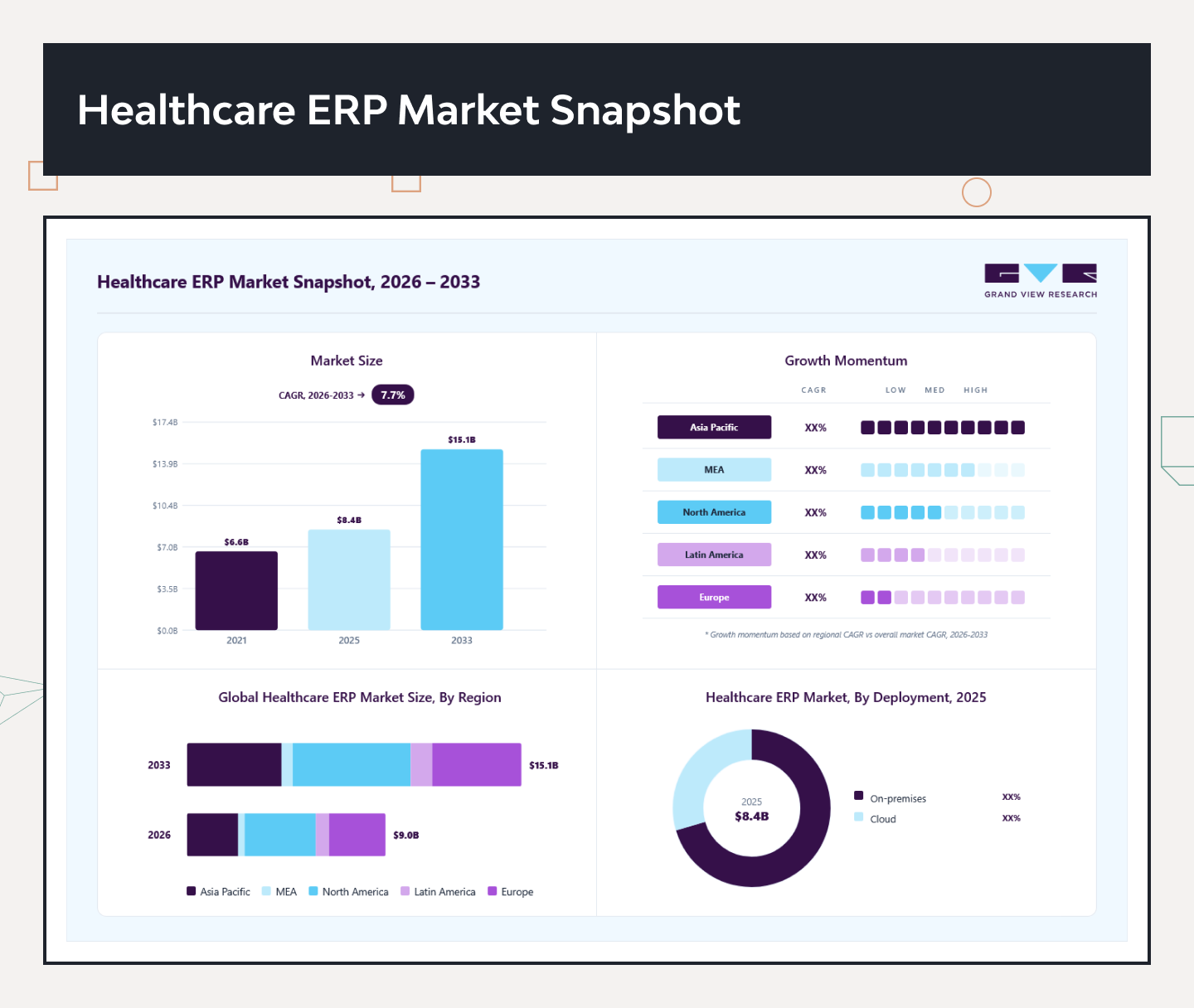
ERP for healthcare automates high-volume administrative tasks—from procurement and invoice approvals to inventory replenishment and interdepartmental workflows. More importantly, ERP synchronizes operational data for finance, supply chain, HR, and clinical support teams. Healthcare ERP thus instantly accelerates data entry and eliminates pricey duplicate work.
- Cost control and financial visibility
ERPs consolidate billing, procurement, payroll, budgeting, and accounts payable into a unified platform that helps healthcare providers ease cost pressures and optimize reimbursement flows. Specifically, ERP can track spending by department, pinpoint cost overruns, monitor reimbursements, and help manage revenue cycles.
- Improved resource management
Hospitals and healthcare centers can use ERP systems to balance staffing levels, bed capacity, medical equipment, and inventory in response to changing patient demand. A richly integrated ERP also enables predictive resource planning, which allows for informed workforce scheduling, automated inventory replenishment, and accurate demand fulfilment.
- Regulatory compliance support
With ERP implementation in healthcare, a compliance-first platform can be built with inherent regulatory support and high-standard security. In particular, you can set up HIPAA-oriented healthcare workflows and GDPR-compliant data storage. You can also implement immutable audit trails, data governance tiers, and other custom measures.
- Enhanced decision-making through data analytics
ERP systems commonly feature real-time dashboards that present operational, financial, and workforce data as clear analytical insights (and smart recommendations when AI is in place). Specialists can monitor KPIs such as labor costs, procurement efficiency, inventory utilization, and service-line profitability, enabling well-informed workflow decisions.
Key features of healthcare ERP software
Financial management
- Accounting and general ledger
ERP’s centralized financial ledger automatically consolidates all transactions coming from the medical facility’s service billing, resource procurement, and internal payroll.
- Budgeting and forecasting
ERP creates a single source of truth for accurate accounting and analytics-based forecasting of demand forecasting and upcoming expenditure planning.
- Revenue cycle management
Clear, transparent visibility into financial flows allows managing entire revenue cycles, with detailed, auditable reports.
- Billing and invoicing
ERP can autonomously generate accurate invoices, process incoming insurance claims, and offer multiple payment methods.
Human resources management
- Employee records
Healthcare ERP stores employee profiles, certifications, contracts, and employment history in a centralized database.
- Payroll management
ERP automates payroll calculations, overtime, benefits, and tax deductions. It then integrates all the readings directly with workforce data.
- Workforce scheduling
ERP can generate intelligent staff schedules based on shift availability, relevant skills, certifications, and patient demand.
- Credential tracking
Admins can use ERP to monitor professional licenses, certifications, and credential expiration dates through automated alerts and compliance features.
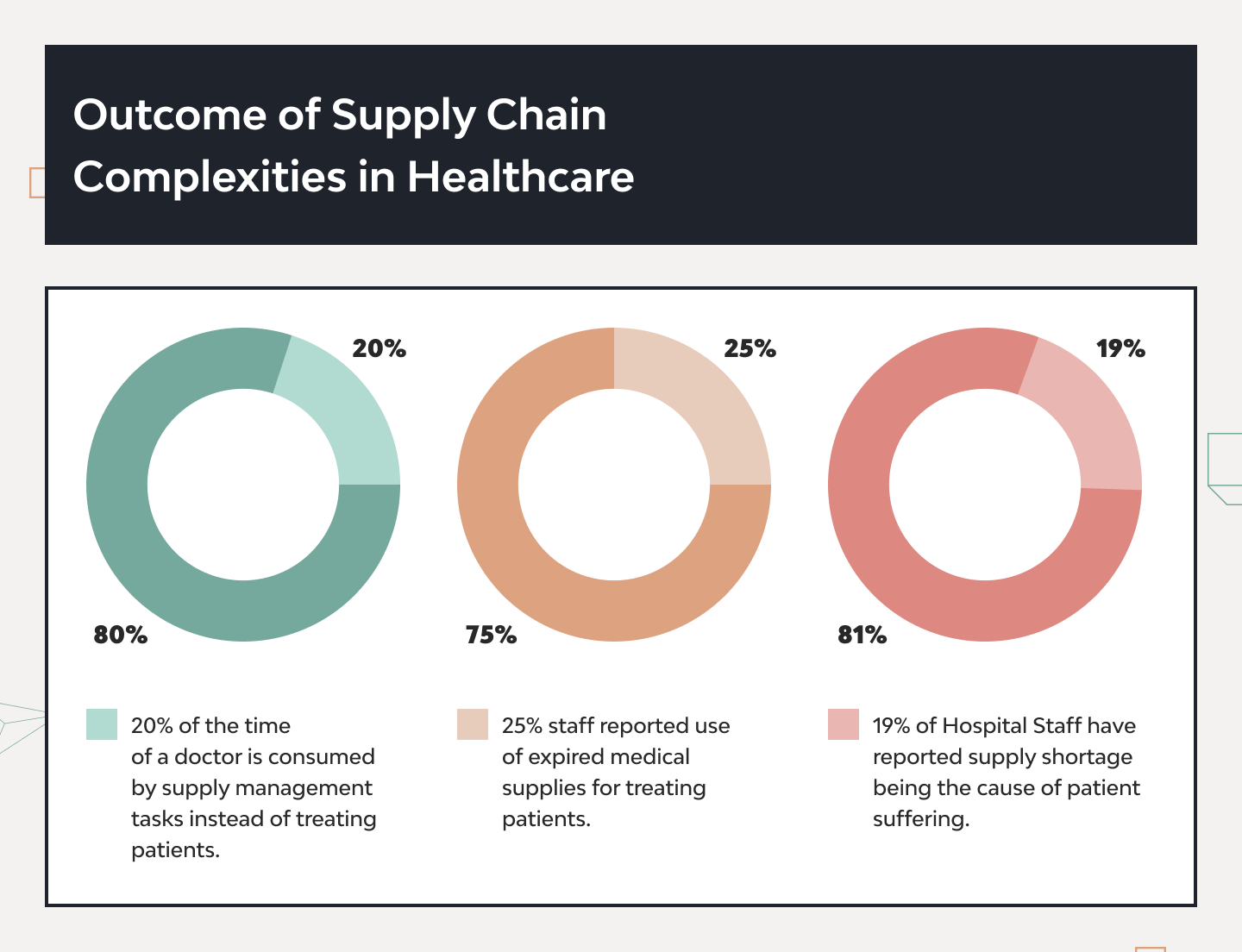
Supply chain and inventory management
- Medical inventory tracking
ERP provides a dynamic view of circulating medical supplies, pharmaceuticals, implants, and consumables, with real-time updates from barcode or RFID scanning.
- Procurement management
An ERP system can automate purchasing workflows, approvals, and replenishment based on inventory thresholds and forecasted demand.
- Vendor management
Healthcare managers can use ERP to centralize all supplier information, purchase deals, pricing quotes, and performance metrics.
- Asset tracking
ERP enables thorough tracking of high-value assets and operational data points — you can monitor the location, maintenance schedules, and lifecycle of medical equipment.
Patient administration
- Appointment scheduling
A healthcare ERP coordinates appointments across departments, providers, and facilities via scheduling tools, automated reminders, and calendar synchronization.
- Patient registration
Patient intake can be delegated to ERP, which helps gather demographic, insurance, and consent information before the patient’s in-person visit.
- Resource allocation
ERP enables tasking for clinicians, a full outlook of treatment rooms, and medical equipment management based on direct patient needs and availability.
- Bed management
ERP also helps track bed occupancy, admissions, transfers, and discharges, all with automated real-time updates and capacity alerts.
Analytics and reporting
- Real-time dashboards
ERP systems enable customizable, real-time updated dashboards that help monitor operational, financial, and clinical performance.
- Operational KPIs
ERP dashboards provide an in-depth view of KPIs, such as staff utilization, inventory turnover, appointment efficiency, etc.
- Financial reporting
Budgeting, accounting, and financial reporting can all be consolidated through a healthcare ERP—it can generate statements, departmental reports, and profitability analyses.
- Predictive analytics
AI in healthcare ERP enables forecasting of patient volumes, staffing needs, inventory demand, and financial performance using historical and real-time data.
Compliance and security
- HIPAA compliance
HIPAA requirements necessitate such ERP features as encryption of sensitive patient data, secure access controls, and audit trails.
- GDPR compliance
For data governance in the EU, GDPR-focused ERP features include privacy controls, consent management, and data subject rights management.
- Audit trails
ERP platforms accumulate a complete record of user activities, data modifications, and system events, summing it up in audit logs.
- Access control management
ERPs can feature role-based user access, allowing leaders to set granular permissions for employees to view or modify data.
Types of healthcare ERP solutions
- Hospital ERP systems
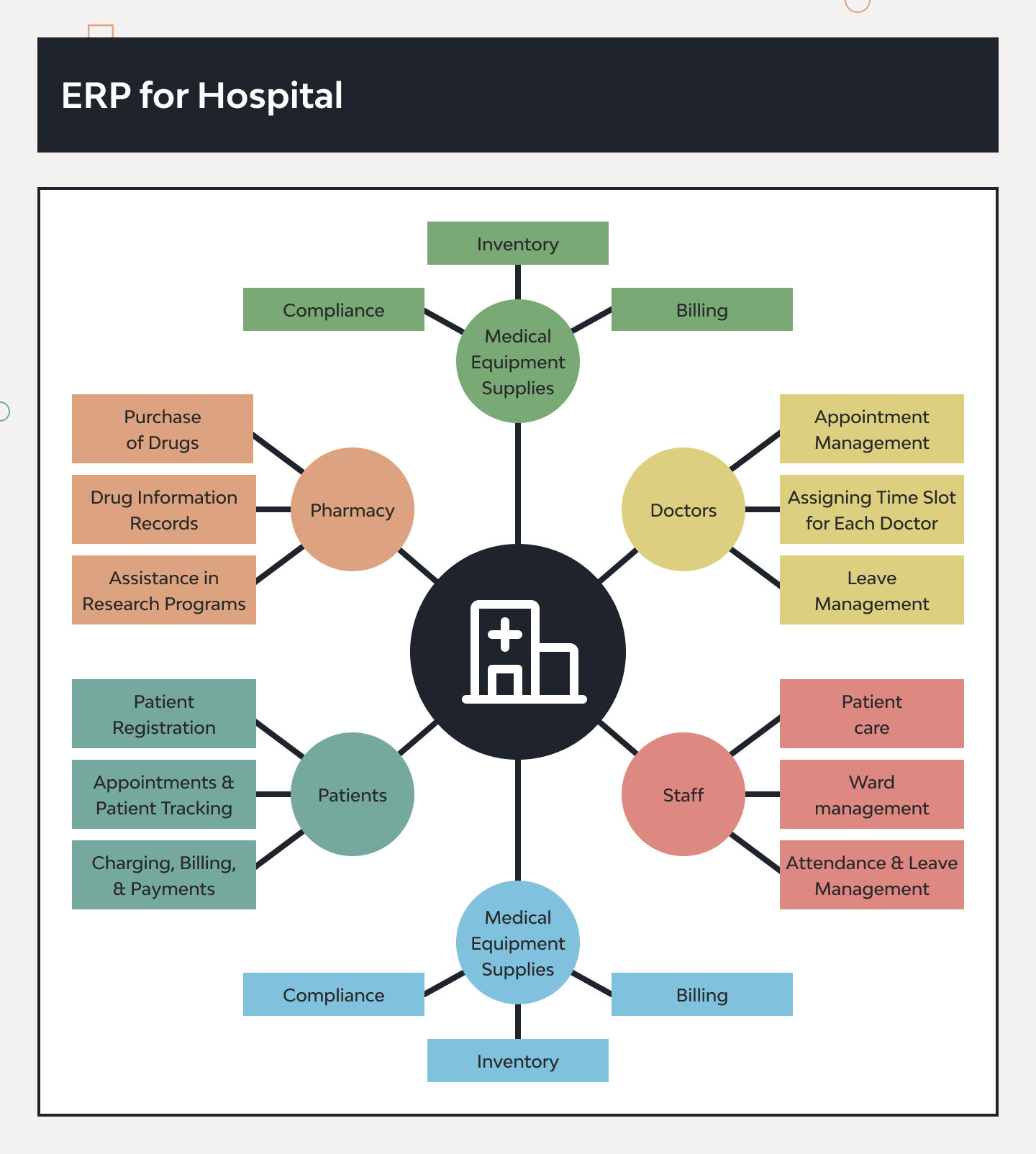
ERP software is commonly leveraged to implement a centralized platform for hospital operations. ERP can assist in handling everything from patient administration and bed management to staff scheduling and financial reporting.
- Clinic management ERP
ERPs are frequently used to streamline daily clinic workflows, often through existing EHR integration. In the clinic, ERP can automate, integrate, and log appointment scheduling, patient registration, billing management, and more operations.
- Multi-facility healthcare ERP
ERP systems can be deployed across multiple healthcare locations to coordinate operations throughout the organization. Namely, through centralized data management, workforce planning, resource allocation, and reporting.
- Healthcare ERP for medical laboratories
Medical labs can leverage custom LIS integration with ERP to boost overall laboratory efficiency. E.g., an ERP system can automate sample tracking and regulatory compliance reporting.
- ERP for long-term care facilities
ERPs can be easily scaled for long-term care operations with flexible requirements. Namely, it can provide dashboards for resident management, medication tracking, staff scheduling, and reimbursement control.
- ERP for healthcare networks and enterprises
In large part, ERP software is meant to drive enterprise-wide healthcare operations and help maintain compliance oversight that involves critical business intelligence. Here, ERP can help automate and optimize tasks from supply chain management to full financial consolidation.
Healthcare ERP modules
- Finance and accounting
There are convenient healthcare ERP modules that provide extensive coverage of service payment operations and revenue cycle management based on cross-integrated patient data. ERP centralizes accounts payable and receivable, equips them with insightful financial reporting, and enables long-term efficient budgeting and forecasting.
- Procurement and supply chain
ERP software enables synchronized vendor and inventory management, granting end-to-end supply chain visibility and fine control tools. Healthcare and business procurement automation further optimizes the supply chain by alerting to stock-outs and autonomously reordering necessary items.
- Human Capital Management (HCM)
A human capital management module allows admins and managers to fine-tune workforce scheduling, use synchronized credential tracking, and centralize employee records from across healthcare facilities or networks. The HCM module also enables payroll management with user-by-user payment automation.
- Patient relationship management
Patient-focused modules provide features that assist and automate user experience, from appointment scheduling based on specialist availability to patient registration, follow-ups, and personalized alerts. The ERP-powered communication management helps steer overall patient engagement through personalization.
- Asset and equipment management
There are ERP modules that can be tailored to facility-wide medical equipment tracking and supply utilization monitoring. ERP can be tuned to track any resources, really, enabling customizable asset lifecycle management and raising its efficiency with preventive maintenance (if AI is in place).
- Business intelligence and reporting
ERP software can reach deep into operational patterns and help process BI for insightful KPI monitoring and predictive reporting. ERP-driven operational analytics allows for a high-level overview of all processes that can be tracked thanks to real-time dashboards.
Benefits of healthcare ERP software
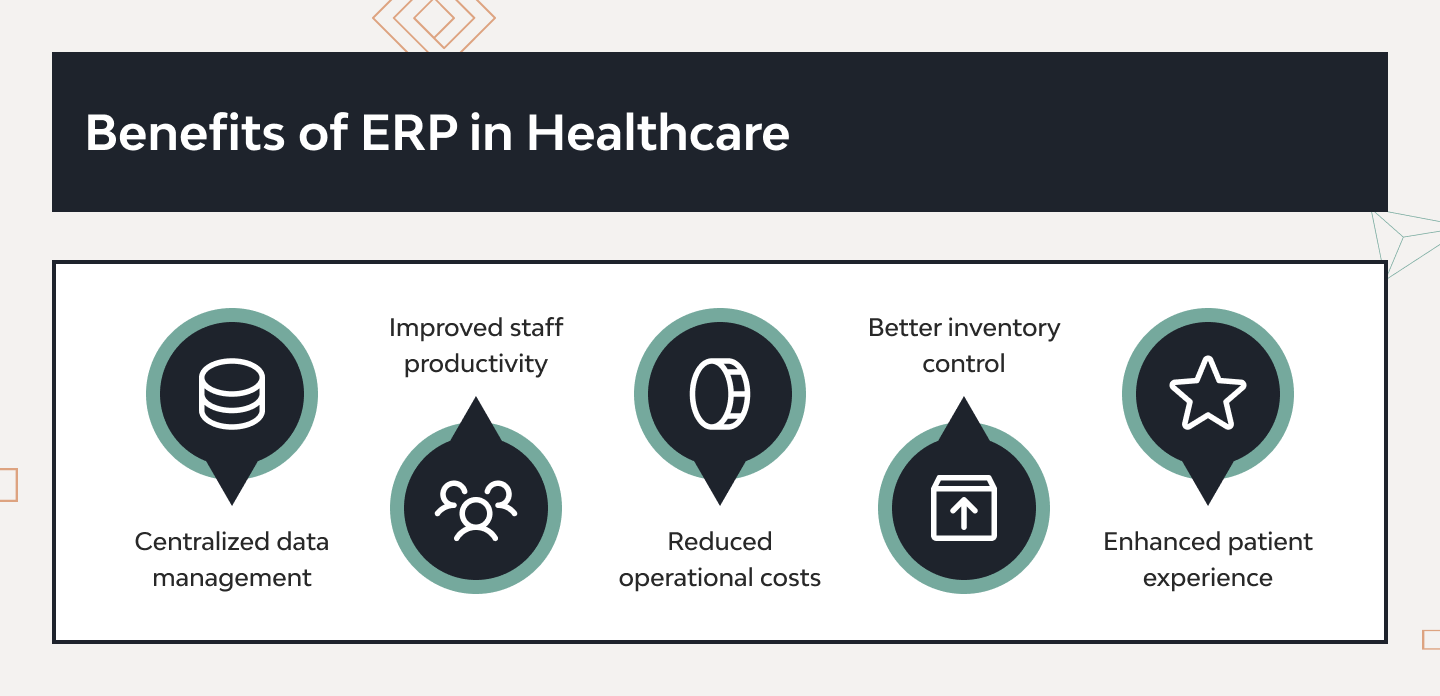
- Centralized data management
Healthcare ERP solutions bring all data together, granting unified patient records, synced-up financial data, and real-time updated inventory information. Complete data centralization enables cross-department visibility and makes it so much easier to structure and optimize large-scale or multi-facility healthcare enterprises.
- Improved staff productivity
A variety of ERP features reduces administrative burden, smooths out routine tasks, and creates new space for optimization—all thanks to data-driven workforce scheduling, intelligent task management, and general workflow automation.
- Reduced operational costs
The ability to fine-tune inventory control and achieve cost-saving resource optimization is one of the core benefits of ERP in healthcare. Procurement automation eliminates excess costs and routine overruns, while financial transparency from ERP dashboards helps pinpoint obscure expense factors.
- Better inventory control
ERP helps avoid supply shortages and stockouts in a timely manner, achieving gradual waste reduction and fulfilling the product/service demand at the same time. Real-time inventory tracking shows the current state of supplies, alerts to the upcoming need for stock replenishment, and personalizes medical supply management for patient profiles.
- Enhanced patient experience
A high level of patient care personalization can be achieved with healthcare ERP thanks to insightful coordination of appointments, faster service delivery, and on-point care management. ERP also improves overall communication with patients thanks to their relevant information always being in reach.
- Increased regulatory compliance
Healthcare ERP development allows you to build audit trails, access controls, and regulatory reporting into the core functionality of your future platform. These features facilitate GDPR/HIPAA compliance and safeguard a healthcare provider from complex disputes.
- Scalability for growth
There is really no limit to ERP system scaling if you have sufficient developer skill and choose the right approaches. For instance, cloud infrastructure can help scale ERP software for multi-facility management, large-scale process standardization, and enterprise-wide visibility.
Healthcare ERP integrations
- EHR/EMR systems
Integration with Electronic Health and Medical Records can help centralize and optimize care coordination by syncing relevant patient info with medical services and billing. For this purpose, an ERP system can unify patient records, treatment histories, and related clinical documentation to enable accurate analyses and diagnostics.
- Healthcare CRM
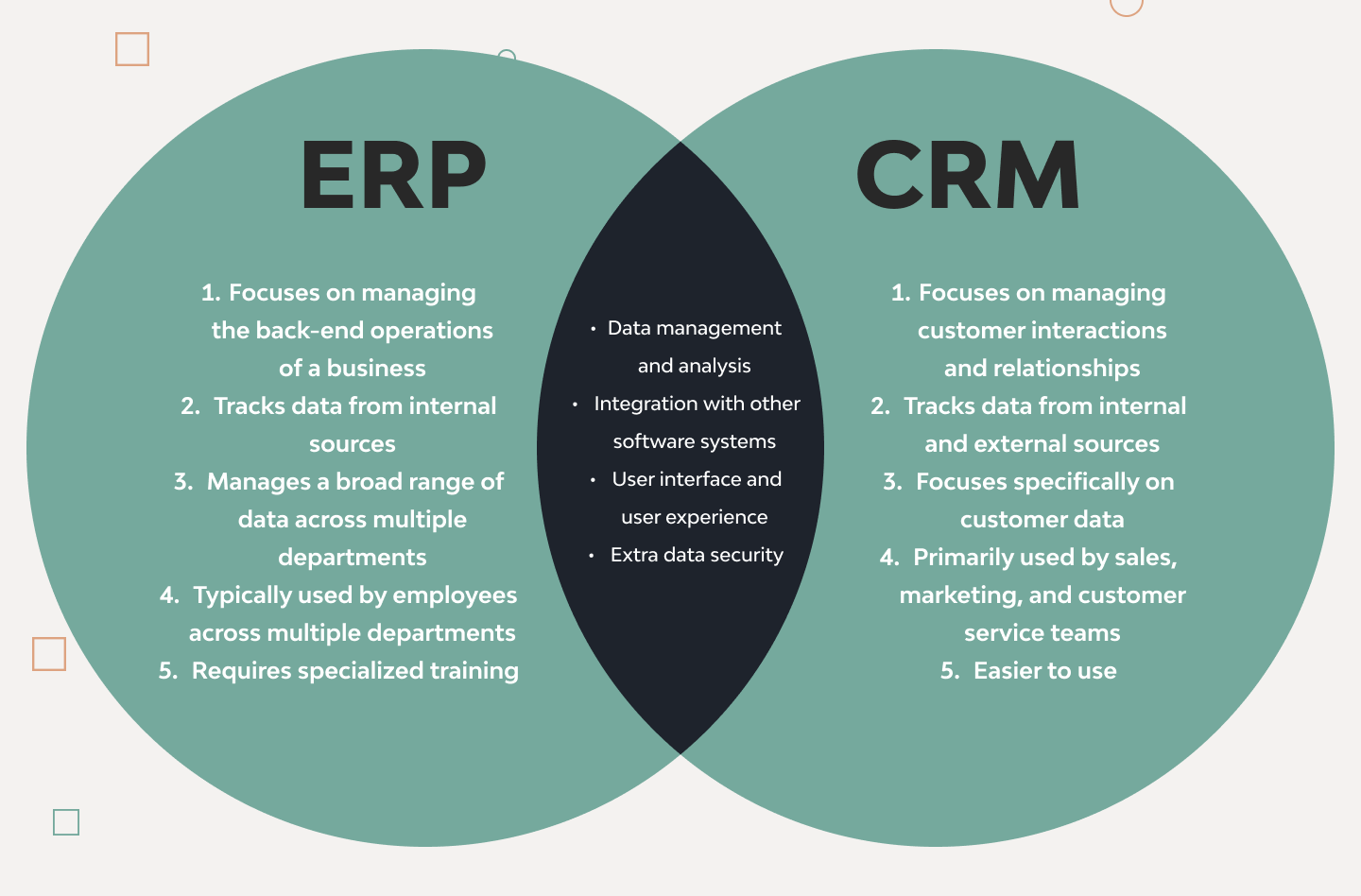
ERP software commonly integrates with external Customer Relationship Management systems for in-depth patient engagement based on relevant user data. The ERP-CRM integration enables comprehensive communication management, including appointment reminders and self-service automation, thereby improving patient retention.
- Hospital management software
Custom ERP platforms readily integrate with the required hospital operations through existing systems (e.g., patient administration or management systems). ERP will give a hospital an extra suite of tools dedicated to streamlined resource allocation and patient and staff management.
- Laboratory information management system (LIMS/LIS)
By integrating an ERP system with existing LIMS, LIS, or custom lab systems, healthcare providers can connect laboratory workflows directly to patient service provision. They can also use ERP for sample tracking and test results management, feeding relevant enterprise data to labs and back for high-level quality control.
- Patient portals
Healthcare ERP solutions commonly feature integrated patient portals with self-service features, patient profile customization, and direct medical records access. Such portals give patients convenient appointment scheduling straight out of any browser while guaranteeing secure communication thanks to ERP data governance.
- Telemedicine platforms
Integration with telehealth and remote patient monitoring platforms further actualizes all the data gathered by an ERP system. ERP personalizes virtual consultations and video conferencing, offering instant access to updated patient data and boosting care accessibility for both doctors and online visitors.
- Business intelligence tools
ERP systems are integrated with KPI monitoring and data analytics platforms to help healthcare providers leverage internal BI for insightful new purposes. In particular, they can set up operational reporting and use ERP insights for next-best decision support.
Custom healthcare ERP development vs. off-the-shelf solutions
Custom healthcare ERP development
- Advantages
A custom ERP is built around an organization’s existing workflows and processes—patient admissions, procurement flows, operating room scheduling, pharmacy inventory, etc. A custom system can also be more broadly integrated, scaled only in the direction you need, and built as an authentic platform that reflects your organization’s attributes.
- Limitations
On the flip side, custom healthcare ERP development requires a higher upfront investment and may take longer to finalize (depending on the complexity of the customization). The process may also entail data governance risks and a unique list of ERP system ownership responsibilities.
Ready-made ERP platforms
- Advantages
Commercial, out-of-the-box ERP platforms can be implemented quickly, thanks to pre-built modules that need few settings, and at a lower initial budget, thanks to subscription-based pricing and standardized integration. On top of that, proven ERP vendors offer refined platforms built on industry best practices, which they readily support externally, handling patches, compliance, maintenance, and scaling.
- Limitations
At the same time, ready-made solutions may limit your freedom to scale due to vendor lock-in, which allows only a certain degree of software customization. The same goes for integration constraints — if you need expanded functionality, ongoing costs may outweigh the cost of a major investment in custom development.
How to choose the right approach
To make the choice easier, answer these questions:
- Do standard ERP processes fit your organization (ready-made), or do you need to adapt unique workflows (custom)?
- Do you require only essential EHR and laboratory system integrations (ready-made), or would you also like to connect medical devices and third-party applications (custom)?
- Does your organization require in-depth compliance, auditability, or specialized security controls (custom), or can it do with essential protocols only (ready-made)?
- Can you afford licensing, support, customization, and future scalability over five to ten years (custom), or are you looking to cut costs (ready-made)?
How to develop a healthcare ERP: Step-by-step process
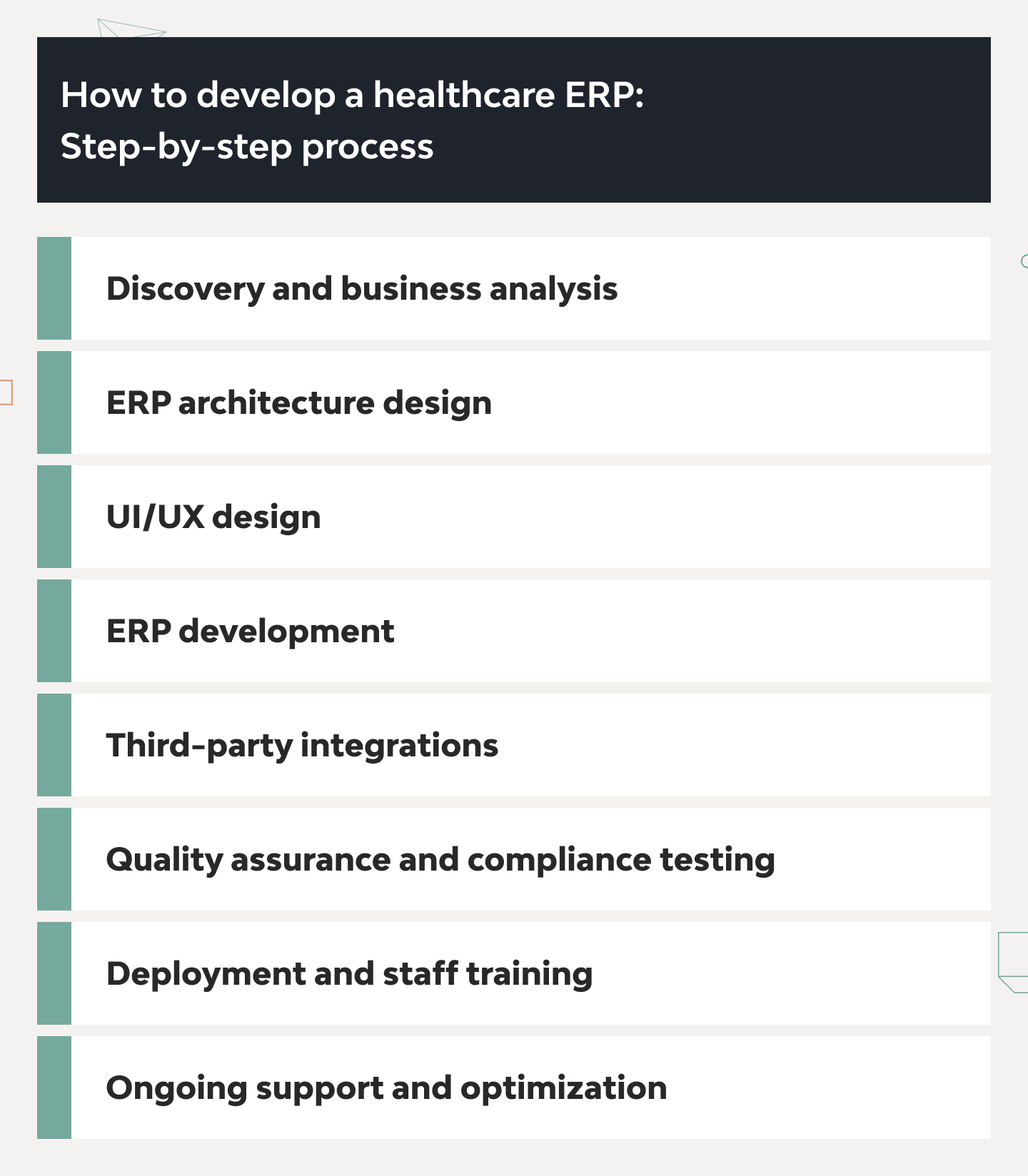
- Discovery and business analysis
The healthcare ERP development process starts with requirements gathering and stakeholder interviews to complete thorough project planning. For hospitals, clinics, and healthcare practices, additional workflow assessment and business process analysis are also required to map out operations and digitize them accordingly using an ERP system.
- ERP architecture design
To set up a robust backend foundation, software developers conduct scalability planning, choosing the database design and system architecture that will best fit tech and business goals at hand. This stage also includes selecting a security architecture, which may require a separate effort.
- UI/UX design
Next comes the frontend—interface design and structuring of user experience to make ERP intuitive and user-friendly. This stage may require extra user research, usability testing, and workflow optimization to polish and finalize the UI/UX design.
- ERP development
If you are going with custom ERP development, be ready to prioritize and complete feature implementation, set up data management mechanisms, and handle integrations. Also, ERP-based workflow automation may need configuration to personalize its functions.
- Third-party integrations
ERP software boasts efficient HL7/FHIR connectivity (for safe, compliant secret data sharing) and easy EHR/EMR integration (for patient profile data synchronization). Additional data sources can be connected, and integrations can be made with custom API development for an ERP system.
- Quality assurance and compliance testing
The designed and developed ERP software must be thoroughly tested and validated before real-world use. This entails functional and performance testing, security validation, and compliance verification before the software deployment.
- Deployment and staff training
For stable performance and smooth future scaling, proper system deployment must take place, with secure data migration from existing legacy systems (if necessary). The deployed ERP software must be introduced to the end-users through proper training and go-live support.
- Ongoing support and optimization
Post-launch technical support and performance monitoring are as important as any other stage of the process. For instance, relevant feature enhancements can be made based on live user feedback, and further system optimization can be achieved through patches and tweaks.
Common challenges in healthcare ERP implementation
- Data migration
Running a clinic or healthcare practice generates volumes of information, and a new ERP platform may need to be enriched with it through legacy data transfer. It implies scrupulous data mapping (to analyze existing data points), cleansing (to reformat data for a new database), and integrity verification pre- and post-migration (to keep data holistic).
- Legacy system integration
There’s more to legacy healthcare system integration than data migration — you may need to build the entire ERP system on top of the existing software architecture, expanding it with third-party integrations. It requires full system synchronization, interoperability support, and custom API connectivity.
- User adoption
The introduction of the new ERP system and the following workflow adaptation may require a whole separate effort. Specifically, the ERP system must have user onboarding features (e.g., interactive manuals, tutorials, and instructions), while additional staff training and change management may also be required to promote the usability of AI or other complex ERP features.
- Regulatory compliance requirements
The implementation of ERP in the healthcare industry requires strict patient data encryption, access controls, and audit trails to meet all compliance standards. In particular, you may need to obtain HIPAA eligibility certification and reinforce data security for GDPR compliance.
- Budget and timeline management
Before ERP software can be implemented and start taking over important operations, you must outline the development milestones and complete project planning, dedicating separate space to management. Specifically, you will handle risk management, cost control, and asset and resource allocation.
AI-powered healthcare ERP: Emerging trends
- Predictive resource planning
AI expands healthcare ERP’s resource allocation and capacity planning powers with in-depth analyses and intelligent next-best decisions. AI forecasting and supply/service demand prediction are particularly useful capabilities that you can leverage.
- Automated inventory management
ERP systems help achieve optimal inventory optimization by automating regular stock replenishment, alerting to stock-outs and supply shortages, and reducing waste by leaving no stone unturned (thanks to thorough workflow visualization). Supply forecasting additionally reinforces the efficiency of inventory management automation.
- Workforce optimization
Intelligent ERP software ties workflows up, centralizes data access, and enables workforce analytics that generate invaluable insights for the right workload balancing. Again, AI-powered labor forecasting helps fine-tune staff scheduling and tasking even more efficiently in the long run.
- Financial forecasting
The financial modeling and cost analysis capabilities of AI turn ERP into a powerful accounting engine that consolidates billing and payment data in a managed environment. AI-based revenue prediction helps further improve healthcare service budget planning by keeping expenditure levels balanced.
- Clinical and operational analytics
AI-enabled clinic ERP systems can do patient flow analysis and maintain performance monitoring for the facility(ies). The resulting reports of healthcare KPIs provide valuable operational insights that help perfect the operations.
- Intelligent reporting
ERP can be equipped with real-time dashboards that grant fully automated reporting and convenient data visualization. The regularly generated summaries and reports can serve as insightful decision support.
How to choose a healthcare ERP development partner
Healthcare industry expertise
The only viable guarantee of reliable healthcare software development services is firsthand expertise and relevant skills—they must understand how procurement, compliance, and other workflows function. So above all else, make sure to choose a partner with enough experience developing specialized software for hospitals, clinics, laboratories, or healthcare networks (not just general ERP systems).
Regulatory compliance knowledge
Regulations are a must in healthcare, given the sensitive nature of the data and medical operations involved. Your development partner should have practical experience implementing requirements such as HIPAA, GDPR, audit logging, data retention, encryption, and role-based access controls.
Integration experience
Healthcare ERP integrates with existing external systems 99% of the time, expanding on the legacy or non-automated clinical workflows. Particularly, you should look for a tech team with proven experience integrating EHR and ERM systems, lab databases, pharmacy platforms, PACS, payment gateways, and custom third-party apps.
Security-first development approach
An experienced partner should provide skills to implement secure software architecture, with encryption, identity and access management, and vulnerability testing. They should also incorporate continuous monitoring and zero-trust security principles in the early design stages.
Long-term support capabilities
Reliable software vendors never drop a finished ERP system even after its successful launch. Moreover, regulations and workflow needs in healthcare constantly change, so you will certainly need software specialists to handle updates, scalability upgrades, and ongoing core maintenance.
Hire experienced developers to build your next project with DjangoStars