EHR Integration Guide: Benefits, Standards, Process & Best Practices


Hospitals, clinics, and private practices need a reliable source of truth to treat the same patients, and integration with EHR allows sharing patient information accurately without going far. EHR helps centralize the data that would otherwise stay trapped in disconnected systems.
This guide will help providers, healthcare organizations, software vendors, and HealthTech startups clarify the big question—what is EHR integration, why do you need it, and how does it work?
What is EHR integration?
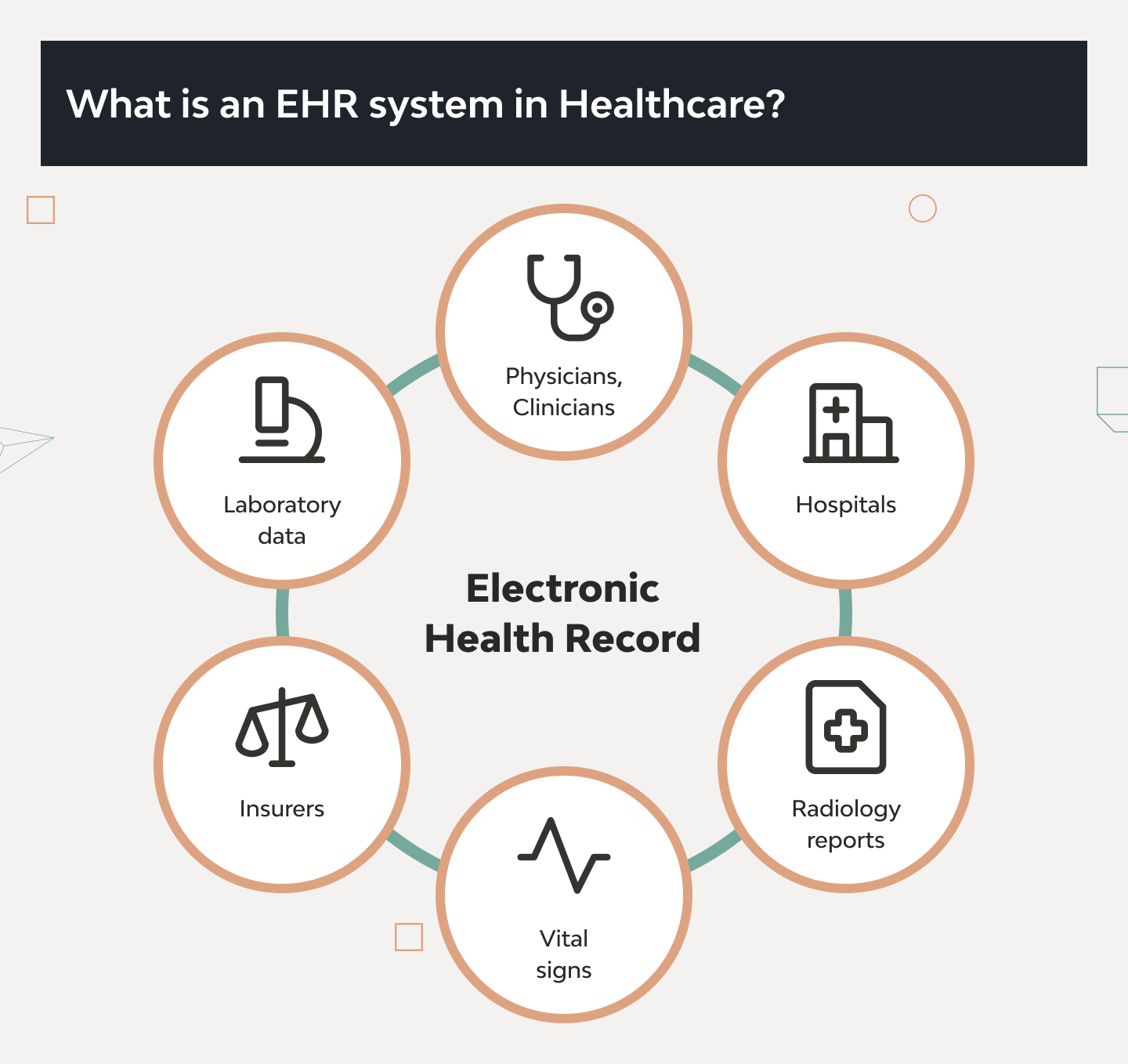
EHR integration is the process of connecting an Electronic Health Record with other healthcare applications, medical devices, and external systems so they can exchange patient information. EHRs help synchronize clinical and administrative data in real time, creating a unified digital ecosystem that can be leveraged for diagnosis, treatment, billing, care coordination, and patient engagement.
Now, don’t confuse EHR with EMR—Electronic Medical Records. EMR systems are similar tools used to digitize patient data, but they operate internally and only within a single healthcare facility. In turn, EHR systems offer interoperability, expanding patient data access across different care settings and organizations.
Healthcare providers commonly integrate EHRs to refer to a single “registry” of shared patient data. However, the EHR integration meaning can be slightly different for your specific case—you may wish to set up data pipelines with a laboratory or pharmacy, synchronize your existing clinical workflow with telehealth platforms for scaled services, etc.
What are the benefits of EHR integration?
EHR integration is a long-term beneficial decision for any healthcare provider, offering advantages such as:
- Improved patient care – EHR data integration enables centralized, real-time access to patient records. Each EHR record contains a full history of individual treatment and relevant patient milestones. Doctors can use this for more accurate diagnoses and on-point treatment decisions.
- Better care coordination – EHR data centralization enables seamless information transfer between hospitals, clinics, laboratories, pharmacies, specialists, and other care providers. The EHR database is a single source of truth that all facilities refer to for efficient patient care.
- Reduced manual data entry – By automatically synchronizing data across connected systems, EHR eliminates much of the duplicate documentation that healthcare staff would otherwise enter manually. Data entry automation also dramatically reduces administrative workload.
- Fewer medical errors – EHR integration cuts the risk of incomplete, outdated, or inconsistent patient information. Clinicians can instantly check medications, allergies, diagnoses, lab results, and treatment histories. EHRs thus enable accurate patient data exchange across entire healthcare networks.
- Faster clinical workflows – Integrated EHR systems automate routine processes such as lab result delivery, referrals, appointment updates, and order management. The EHR-enabled data synchronization additionally saves time. This combines into a major improvement in operational efficiency.
- Enhanced patient experience – EHRs’ faster access to health information combined with more integrated features can help power personalized patient portals. For example, features like online scheduling, self-service, and telehealth connections enable convenient care for each individual patient.
- Better regulatory compliance – EHR platforms enable secure data exchange and comprehensive audit trails, contributing to interoperability requirements and regulatory compliance. By recording every authorized entry, modification, and transfer of data, EHR simplifies HIPAA/GDPR compliance while protecting clinicians from patient disputes.
- Improved financial performance – The integration with EHR systems also offers features for revenue cycle management. E.g., clinicians can automate insurance verification, coding, and billing based on accurate patient records and relevant clinical data.
How EHR integration works
Data exchange process
The primary function of EHR integration is interoperable data sharing. To enable the exchange of clinical, patient, and administrative data across facilities or departments, EHRs use APIs, standardized communication methods, and healthcare messaging standards. In addition, EHR systems employ specialized standards for structured clinical document exchange (CCD/C-CDA).
Here’s how it all works technically:
- APIs allow to сonnect EHRs with third-party applications, patient portals, telehealth platforms, medical devices, billing systems, RESTful interfaces, and any compatible healthcare software. They help quickly set up end-to-end data exchange between two applications, thus enabling integrated interactions.
- HL7 messaging enables a protected, real-time exchange of patient admissions, laboratory results, clinical observations, orders, and discharge information. The “Health Level Seven” regulation (HL7) sets the rules for data sharing between medical computer systems, standardizing how various MedTech and HealthTech devices “communicate”.
- FHIR resources simplify the interoperable exchange of patient records (including medications, appointments, encounters, diagnostic data, etc.). Namely, the “Fast Healthcare Interoperability Resources” are simplified blocks of health data that the FHIR framework obtains from complex medical assets.
- CCD/C-CDA documents safeguard a framework for the structured exchange of clinical summaries, care plans, allergies, medications, problems, procedures, and patient history across providers. The “Consolidated Clinical Document Architecture” governs the structured packaging of patient health records (into XML) and provides pre-tuned templates for that.
Typical integration workflow
EHR integration implies laying down a structured workflow where healthcare data is exchanged accurately, securely, and according to relevant interoperability standards. To achieve that, your EHR tech partner must handle:
- Data capture — collecting patient information from existing EHRs, medical devices, adjacent laboratories, patient portals, and other connected healthcare systems.
- Data transformation — converting data into compliant, standardized formats according to the HL7, FHIR, and C-CDA guidelines.
- Secure transmission — transferring healthcare data through encrypted APIs between interface engines or cloud integration platforms, while maintaining secure messaging.
- Validation — verifying the integrated data’s accuracy, completeness, consistency, and compliance under each standard and regulation.
- Storage and synchronization — managing storage of the validated data from clinical, operational, and financial applications; re-verifying the data at scheduled intervals; and synchronizing data updates with the EHR ecosystem in real time.
Common types of EHR integrations
EHR integrations come in many forms, but the most common third-party EHR connections usually include:
- Laboratory integration – EHRs readily connect with existing laboratory information systems (LIS) and help automate lab order management. The EHR lab integration delivers precise diagnostic test results reinforced by specimen tracking data and clinical reporting.
- Imaging integration – Cross-integration with Picture Archiving and Communication Systems (PACS) and Radiology Information Systems (RIS) gives clinicians direct access to super-res medical images and radiology reports. EHRs can thus power diagnostic imaging workflows in main clinical systems.
- Pharmacy integration – Electronic health record integration with pharma providers enables secure exchange of prescription data, which can power ePrescribing based on accurate medication histories. The EHR integration can reflect updated drug interaction checks, pharmacy fulfillments, and medication reconciliation cases.
- Billing and revenue cycle integration – Clinicians can connect EHRs to medical billing software, insurance verification systems, invoice coding platforms, gaining access to claims management solutions and revenue cycle management (RCM) tools. Payments EHR integration helps manage healthcare service and product fulfillment, billing, and insurance submissions.
- Telemedicine integration – By integrating EHR with platforms for remote patient monitoring and virtual consultations, clinicians can connect with patients using the same system that manages patient records (and other integrated functionalities). EHRs automate the appointment scheduling of video visits and synchronize clinical notes after sessions.
- Patient portal integration – EHR integration with patient portals enables secure access to up-to-date medical records and lab results. The EHR can power appointment scheduling and prescription refill requests directly from a patient portal, while connecting secure messaging and online payments (via other EHR integrations) for a complete patient experience.
- CRM integration – By connecting with customer relationship management (CRM) platforms, EHRs help take care coordination and patient engagement to another level, with personalized communication and marketing automation. You can set up CRM-based appointment reminders, billing summaries, and personal updates by patient profiles.
- Mobile health apps – EHR systems can equip mobile healthcare applications with instant access to health records and wellness tracking features. EHRs can thus empower chronic disease management by getting live data from smartphones or wearable devices that support patient monitoring.
- AI and clinical decision support tools – Integration with artificial intelligence (AI), machine learning, and generative AI solutions makes EHR-based workflow automation more intelligent. The AI-EHR match can be used for highly precise diagnostics, patient risk assessment, and treatment recommendations, efficiently powering clinical decision support systems (CDSS).
EHR integration standards
The EHR integration process is well-standardized, with the following standards governing healthcare-focused functionality:
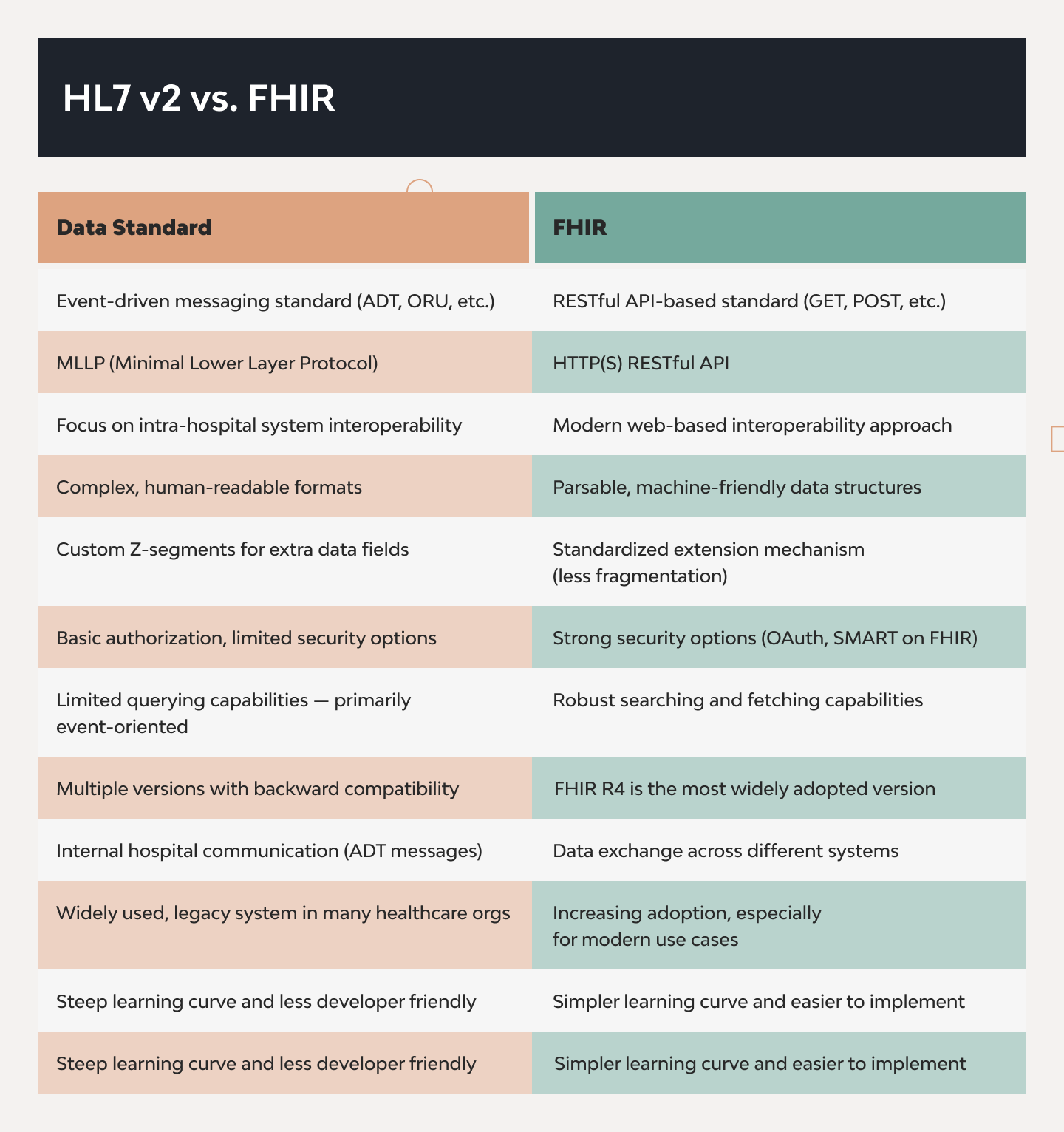
- HL7 v2 – The latest universal healthcare messaging standards and rules are put forth in HL7 Version 2. The Healthcare Level Seven framework helps govern the accuracy and safety of exchanging patient admissions, discharges, transfers (ADT), laboratory results, orders, and related clinical events.
- HL7 FHIR – HL7 Fast Healthcare Interoperability Resources (FHIR) help maintain a single interoperability standard and exchange healthcare data seamlessly through RESTful APIs. HL7 FHIR provides the API-based mechanism for secure, compliant sharing of patient records, medications, appointments, observations, care plans, and other health-specific data.
- C-CDA – A Consolidated Clinical Document Architecture (C-CDA) provides guidelines and templates for healthcare information exchange. It sets a standard format (usually XML) for sharing clinical documents, including patient and discharge summaries, referral notes, medications, allergies, care plans, and others.
- DICOM – EHR platforms must comply with the Digital Imaging and Communications in Medicine (DICOM) standards for storing, transmitting, and managing medical images gathered. This is a must for EHRs that integrate with PACS, radiology systems, and specialized imaging devices.
- SMART on FHIR – SMART on FHIR is a standardized framework that governs the safe interactions between healthcare applications and EHRs. In particular, it provides tools for securely connecting third-party clinical apps, patient applications, and mobile provider tools with EHR systems using FHIR APIs.
- OAuth 2.0 and OpenID Connect – OAuth 2.0 and OpenID are the necessary protocols for protected API access and secure authentication with simple settings. While OAuth 2.0 helps manage authorization (e.g., with role-based access control), OpenID can be used to configure user authentication (e.g., by setting up EHR-based identity management).
Methods of EHR integration
EHR systems can be integrated in several ways — each approach offering its own specifics, like:
- API-based integration – The primary method is API-based integration, which enables real-time data exchange and interactions between third-party healthcare applications and medical devices. For this, set FHIR endpoints and use RESTful APIs to interconnect patient portals, telemedicine platforms, mobile health apps, billing systems, and any other related software and hardware.
- Interface engines – One of the most reliable alternative EHR integration solutions is to route the communication between multiple systems through custom-built interface engines. By building an interface around HL7, FHIR, C-CDA, and DICOM standards, these engines can transform, validate, and monitor healthcare messages, making sure each connected application receives data in the format it expects.
- Direct database integration – For legacy EHR systems with limited or no APIs, organizations can rely on direct database integration to exchange data. This approach uses SQL queries to read from or write to the underlying database. It grants fast access to clinical information but requires careful governance to maintain data integrity, consistency, and security.
- Middleware solutions – Healthcare middleware provides an intelligent bridge between EHRs and the organization’s clinical, operational, and financial systems. The middleware can thus be used to set up software communication without connecting every app directly. Beyond transferring data, middleware also handles data mapping and protocol conversion, assists workflow orchestration, and offers tools for error management across applications.
- iPaaS platforms – Integration Platform as a Service (iPaaS) solutions provide cloud-based tools for building, managing, and monitoring healthcare integrations from a centralized environment. Furthermore, you can leverage today’s iPaaS for feature-rich API management, workflow automation (thanks to cloud data sharing), data transformation, and security that combine capabilities of both cloud and on-premises healthcare systems.
Challenges of EHR integration
Although EHR integrations are standardized, the process may still pose challenges that require additional technical effort, such as:
- Legacy systems – Older EHR platforms are built on outdated infrastructure; they lack APIs and fail to meet interoperability standards, complicating integration with newer healthcare applications. Organizations often stick with the well-tried but long-outdated legacy EHR systems, which may require additional system modernization before integration.
- Vendor compatibility – When integrating applications from different EHR vendors, each platform may come with its proprietary APIs, authentication methods, and implementation requirements. Even when the vendors support FHIR interoperability, you may need to customize configurations, endpoints, and resources to manage data between third-party systems.
- Data mapping issues – Data mapping is among the most technically demanding EHR integration challenges—you must translate all assets correctly between systems that use different data models and clinical terminology. Even with standards like HL7 and FHIR, you may still need custom mapping rules to unify varying field structures, coding systems, and documentation practices.
- Security concerns – Because EHR integrations handle highly sensitive patient information , encryption, authentication, access control, and cybersecurity must be core architectural principles. Every integration point could carry potential security risk—it’s essential to encrypt data in transit and at rest, verify identities, and monitor connected systems.
- HIPAA compliance – Healthcare integrations must comply with HIPAA, HITECH, and other applicable regulations governing the security of protected health information (PHI). In addition to securing patient data, you will need clear audit trails that record who accessed, modified, or shared clinical info.
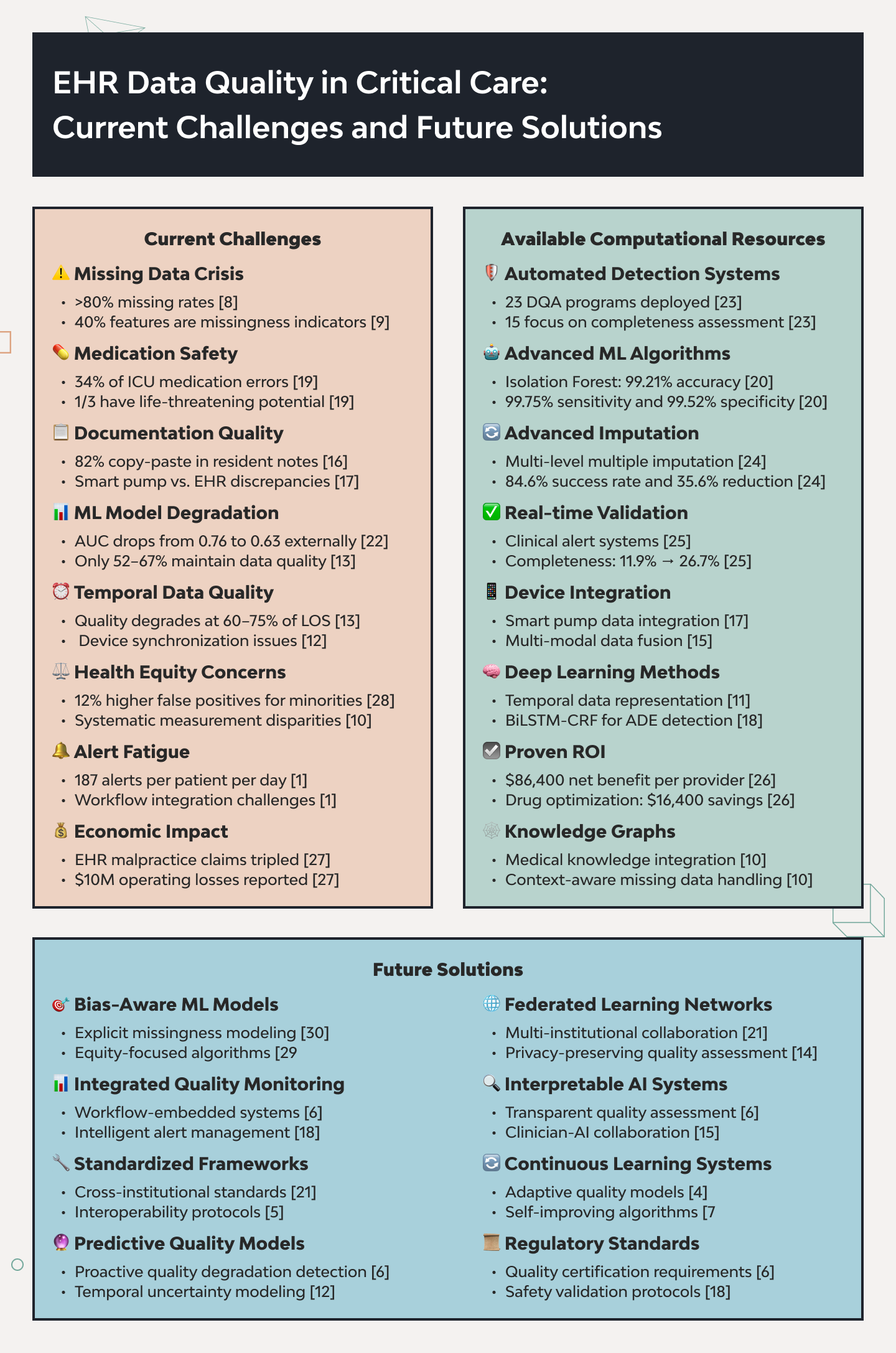
- Data quality problems – EHR integration implies moving lots of high-priority data, each bit of which must be kept complete and usable post-transfer. In particular, you will need to handle extensive data cleansing, validation, and governance to eliminate duplicates, inaccuracies, inconsistent formatting, and incomplete patient records.
- User adoption – A new EHR integration can only be efficient in daily clinician workflows if it’s introduced properly to the administrative and medical staff. Even a highly intuitive user experience will require staff training and change management if the EHR functionality is all too novel for the end users.
- Cost and maintenance – Keep in mind that EHR integration is an ongoing investment that will require management, maintenance, and extra costs even after full implementation. Namely, a lot of post-implementation costs and efforts must be dedicated to ongoing support, software updates, and integration monitoring.
EHR integration best practices
For efficient EHR integration, you can leverage the well-tried approaches and best practices from the industry, e.g.,
- Design around clinical workflows – The most efficient integrations are workflow-driven—they start with the people who will be using the system every day. You cannot force new technological solutions, but you can align integrations with provider workflows, tailor features to specific patient care processes, count on existing clinical documentation, and focus EHR functionality on care coordination benefits.
- Prefer FHIR for modern integrations – For new integration projects, healthcare organizations should prioritize HL7 FHIR, RESTful APIs, and SMART on FHIR whenever possible. As the main framework, FHIR provides standardized healthcare resources that make systems more interoperable and reduce the amount of custom integration logic needed to exchange clinical data securely across different platforms.
- Minimize custom interfaces – Custom integrations can sometimes help solve technical challenges, but they can be quite expensive and difficult to maintain, especially in evolving systems. Your best bet is to follow common industry standards and reduce complexity through vendor APIs, integration engines, and reusable connectors.
- Validate healthcare data – Before synchronizing records between systems, you should verify data accuracy, completeness, consistency, standardized coding, and the overall quality of patient information. This is where you can use automated validation rules and terminology mapping to keep healthcare data trustworthy throughout the integration lifecycle.
- Build scalable architecture – Building cloud-ready, API-first, modular integration architectures enables healthcare organizations to add new systems and scale integrations effortlessly in the future. A modular software architecture allows you to scale components individually, expanding interoperability gradually (if needed) without rebuilding your entire integration infrastructure.
- Implement continuous monitoring – For stable results, monitor integration performance, recheck API availability, audit message delivery and error logs, and conduct overall system health diagnostics from time to time. By staying proactive, you will be able to resolve issues early on and avoid critical circumstances or lengthy fixes.
- Document integrations – Easy to overlook, but it’s very important to maintain comprehensive API documentation and log as much underlying info as you can, including: interface specifications, data mapping rules, workflow descriptions, and integration configurations. Well-documented integrations facilitate onboarding, help with disputes, and free future developers from unnecessary reworks.
- Perform regular security assessments – Conduct regular security audits, vulnerability assessments for each integration trail, penetration testing, and compliance reviews to protect PHI and update your compliance with HIPAA requirements. Periodic assessments will help you keep EHR integrations stable after updates or scale-ups.
EHR integration use cases
EHRs can be integrated in great many cases, but it mostly narrows down to healthcare and related medical facilities, for example:
- Hospitals – Hospitals rely on EHRs to connect patient health records with adjacent laboratory systems, PACS, pharmacy platforms, medical devices, billing software, and clinical decision support tools. This allows hospitals to create a unified flow of clinical and operational data, which speeds up diagnoses, personalizes patient care, and facilitates hospital operations throughout.
- Multi-specialty clinics – For multi-specialty clinics, EHR integration services enable physicians of different specialties to share patient records, coordinate referrals, manage appointments, and synchronize clinical documentation from a single source of truth. Specialists can thus view complete patient histories without requesting records manually.
- Telehealth providers – Proprietary telehealth platforms can connect EHR systems to synchronize virtual consultations with patient histories, clinical notes, and remote patient monitoring data. Clinicians can use the EHR-sourced data for appointment scheduling and automated ePrescriptions, while documenting virtual visits directly within a patient’s medical record.
- Diagnostic laboratories – Integrating Laboratory Information Systems (LIS) with EHRs automates the entire diagnostic workflow, from test orders and specimen tracking to laboratory results reporting and real-time delivery of diagnostic data.
- Pharmacies – Pharmacy integrations help enable ePrescribing based on relevant medication history exchange, prescription fulfillment, drug interaction checks, medication reconciliation, and other info made available by EHR. EHR pharma integrations set up secure communication between pharmacies and healthcare providers.
- Health Information Exchanges (HIEs) – Health Information Exchanges (HIEs) connect multiple EHR systems to enable secure patient data exchange between independent facilities while maintaining interoperability. Integrated HIEs, in turn, help healthcare providers improve care coordination, support public health reporting, and strengthen population health management through quick access to complete patient information.
Why choose DjangoStars for EHR integration services
DjangoStars offers seasoned experts, certified technological qualifications, and personalized services for any scale of EHR and software projects—namely, we offer:
- Healthcare software expertise – We offer 17+ years of experience in healthcare software development and offer firsthand understanding of the industry’s technical and regulatory requirements. We’ve built and modernized EHRs, EMRs, telemedicine platforms, patient portals, medical billing tools, and healthcare analytics solutions that boosted real-world metrics.
- HL7 and FHIR specialists – Our engineers follow established EHR integration best practices and have vast hands-on experience implementing HL7 v2, HL7 FHIR, SMART on FHIR, C-CDA, DICOM, healthcare APIs, and other interoperability standards. We know how to connect EHR platforms and third-party systems of any complexity and custom depth.
- HIPAA-compliant development – We apply security-first development practices, including data encryption, role-based access control, audit trails, and secure authentication. We also conduct regulatory overviews to maintain HIPAA-compliant integrations that safeguard protected health information (PHI).
- Custom integration solutions – To fit the unique technology ecosystems of different healthcare brands, we specialize in building tailored solutions and laying the foundation for integrating laboratory systems, PACS, pharmacy software, telehealth platforms, CRM systems, or medical devices.
- End-to-end implementation – We manage the entire EHR integration lifecycle, from initial integration strategy and solution architecture to custom API development, software testing, deployment, and post-launch optimization.
- Long-term support and optimization – Our partnership doesn’t end after deployment—DjangoStars provides ongoing monitoring, software performance optimization, security updates, and interoperability enhancements. We keep your EHR integrations stable and in line with scaling standards and infrastructure.
Hire experienced developers to build your next project with DjangoStars