EHR Implementation: Strategy, Process, Costs & Best Practices


Up to 96% of US hospitals and acute-care providers have implemented EHR systems, each leveraging and scaling EHR functionality to varying degrees. As more healthcare tasks become digitized, EHRs gain more ground for integration and become valuable for more use cases and implementation scenarios.
The EHR market is growing exponentially with a strong focus on interoperability. EHRs can be flexibly integrated with any number of data sources and adjacent systems, serving as a hub for centralized access to information (patient, administrative, or technical).
EHR implementations can deliver different value for different healthcare organizations—the integration flexibility mentioned above opens room for unique EHR-based platforms of varying scale. Everything depends on how exactly you approach the EHR implementation process, what expectations you set, and what product-budget match you get.
So what is the EHR implementation process like, and how to handle it in the most efficient way possible? Let’s get into it.
What is EHR implementation?
Electronic health records implementation is the process of planning, configuring, deploying, and integrating an EHR system into a healthcare organization’s day-to-day operations. Given the healthcare nature and scale of operations it supports, EHR can’t be installed like any other software.
The implementation may require a full or partial redesign of existing clinical workflows, patient data migration, legacy configurations, additional integrations, and adoption of new EHR tools and features. Its final stages include testing and go-live support, new user onboarding, and post-implementation optimization.
An efficiently implemented EHR system can become a great productivity booster by enabling instant patient data access for clinicians. This single point of reference further automates documentation and patient-facing routines, facilitates administration, and helps multiple departments or even providers accurately treat the same patient.
Note also that the EHR implementation is not EHR development:
- EHR development—full EHR software designing and building from scratch (i.e., developing features, creating user interfaces, implementing security controls);
- EHR implementation—adapting the ready-made EHR system to the clinic’s unique environment (i.e., integrating features, configuring user interfaces, and connecting security controls)
EHR implementation benefits
Implementing EHR comes with a range of advantages that can be leveraged by healthcare providers and medical facilities, such as:
- Improved patient care – EHR implementation offers clinicians real-time access to patient records from a single, centralized system. Specialists can view complete medical histories and gain clinical decision support for higher care quality and treatment accuracy.
- Workflow automation – EHR systems automate routine administrative tasks and reduce manual effort. EHRs enable clinical workflow automation via electronic documentation, e-prescribing, appointment scheduling, and by-employee task management.
- Better care coordination – An interoperable EHR protects a patient’s shared data through health information exchange (HIE) and other connected systems. It also enables a new level of healthcare provider collaboration, with coordinated referral management and continuity of care across several clinics or practices.
- Reduced administrative burden – Automated documentation, digital patient charting, and billing workflows help centralize operations and enable full service coverage in one place. With EHR integrations, e.g., for payments and insurance claims processing, administrative efficiency can be streamlined dramatically.
- Fewer medical errors – Implementing EHR in healthcare supports medication safety and helps prevent patient errors. Connected data sources enable allergy alerts and drug warnings; everything is recorded through standardized documentation, while clinical decision support systems (CDSS) provide more structured insights.
- Improved data accessibility – Сentralized patient records and real-time information sharing make data that much more accessible. Cloud and mobile EHR integrations further improve data availability. At the same time, EHRs help govern secure data access.
- Regulatory compliance – An EHR system provides audit trails, helping stay in line with GDPR and HIPAA compliance or pass the ONC certification. Moreover, EHRs reinforce overall healthcare data security, e.g., through role-based access control and encryption.
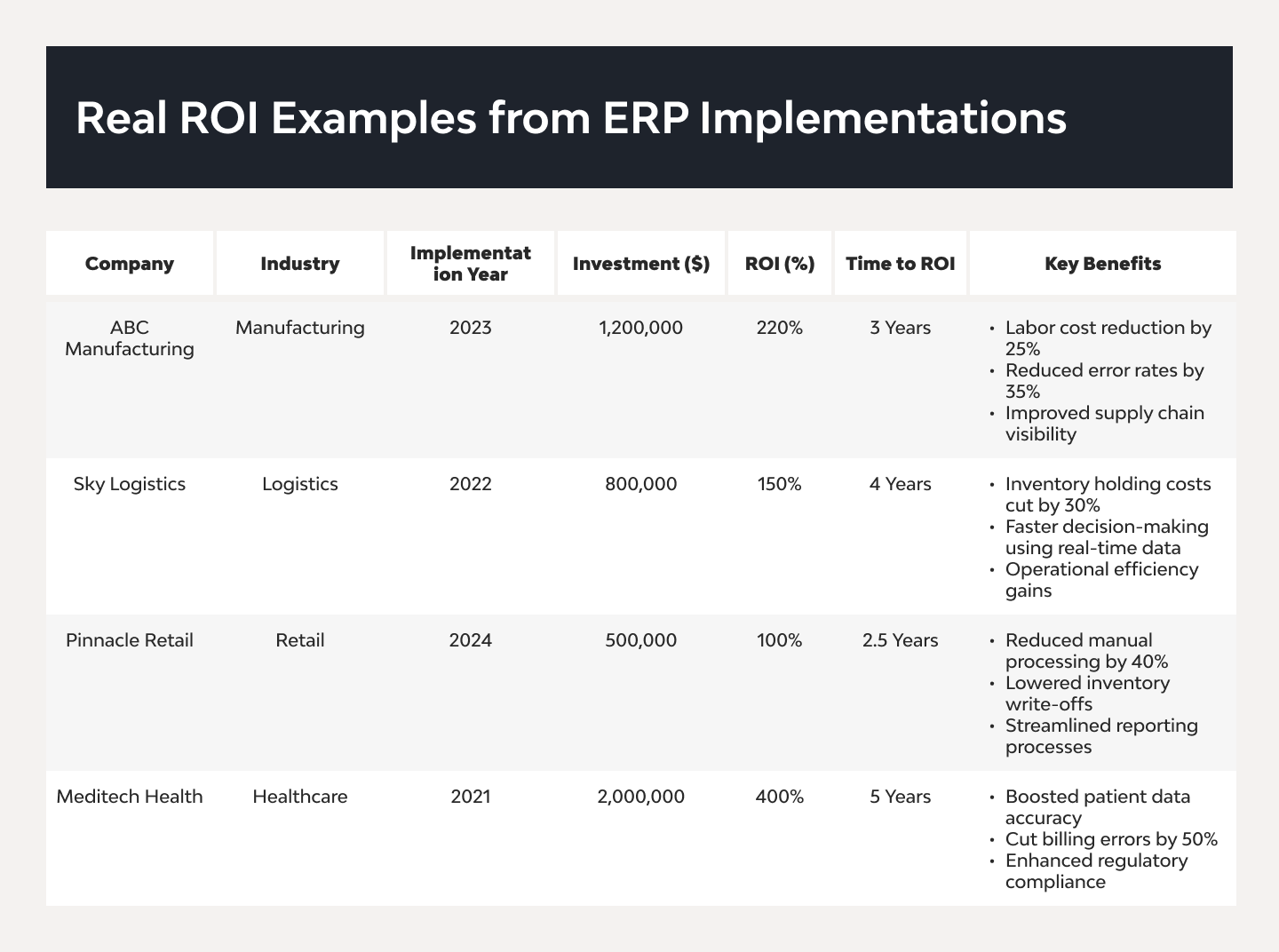
- Long-term cost savings – An efficient EHR implementation delivers a strong return on investment (ROI) by boosting overall operational efficiency. E.g., routine automation, reduced paperwork, and optimized resource utilization significantly lower administrative costs.
EHR implementation process: Step-by-step
In order to implement a new EHR system, you will need to maintain multiple project stages—take these steps for reference:
- Define goals and requirements – For a reliable EHR implementation plan, start with clinical workflow analysis—see how physicians, nurses, administrative staff, and patients interact. Add in business and compliance requirements: the client’s high-level goals and industry regulations. Combine both takeaways for stakeholder alignment and draft a plan with an estimated project scope.
- Plan budget, timeline, and deployment strategy – Use the gathered preliminaries to develop a more detailed implementation roadmap and deployment strategy. Dedicate separate stages of EHR implementation to the technology selection and budget planning, with room for risk assessment. The more initial takeaways you have (e.g., administrative and patient touchpoints, needed optimizations, etc.), the more accurate and realistic the project timeline you’ll be able to set.
- Choose the right EHR solution – Choose the operational and market fit over tons of features. For instance, a custom EHR is the best choice if you want to fine-tune interoperability and have scalability in the EHR’s foundation. Take your time and pick candidates qualified for your goals through careful vendor evaluation. Universally, your candidates should specialize in HL7/FHIR standards and healthcare regulations.
- Build the implementation team – How many professionals will you need and which ones? As a baseline, you’ll need a project manager, software engineers and designers, and an executive sponsor (for high-level organization). However, you may require additional healthcare IT specialists and involved clinicians.
- Configure and customize the EHR – One of the first EHR implementation steps for your chosen team is configuring the software to adapt the EHR to existing clinical workflows and user roles. This usually includes setting user permissions, adding (or designing) documentation templates, tailoring dashboards, and choosing relevant tools for workflow automation.
- Migrate healthcare data – Plan data migration in advance: clarify which patient records you’ll need to retain and identify touchpoints for data mapping. Before migrating a custom legacy system, you may also need additional data validation after cleansing and transformation.
- Integrate with healthcare systems – EHR delivers enormous value as the hub of the healthcare ecosystem. It can simultaneously integrate patient portals, billing systems, laboratory systems (LIS), PACS/RIS platforms, and telemedicine apps. Each integration can thus refer to the EHR as the main source of patient data, enabling efficient care journeys.
- Test the system before go-live – During testing, make sure to validate features, integrations, protection, stability, and UX of the future EHR implementation. For this, your tech partner should help combine functional testing, integration testing, security testing, performance testing, and user acceptance testing (UAT).
- Train medical staff – The implemented and deployed EHR features and automations must be properly introduced to the staff. Efficient EHR user adoption should include role-based training, physician onboarding, change management across new tools, and support with structured training materials.
- Go live and optimize – Go-live support and post-implementation EHR fixes are necessary for long-term stability and system scaling. This should include ongoing maintenance and performance monitoring, reactive issue resolution, and potential workflow optimization.
EHR implementation approaches
The EHR implementation process can be very flexible—depending on your specific case, you can choose from several well-tried methods:
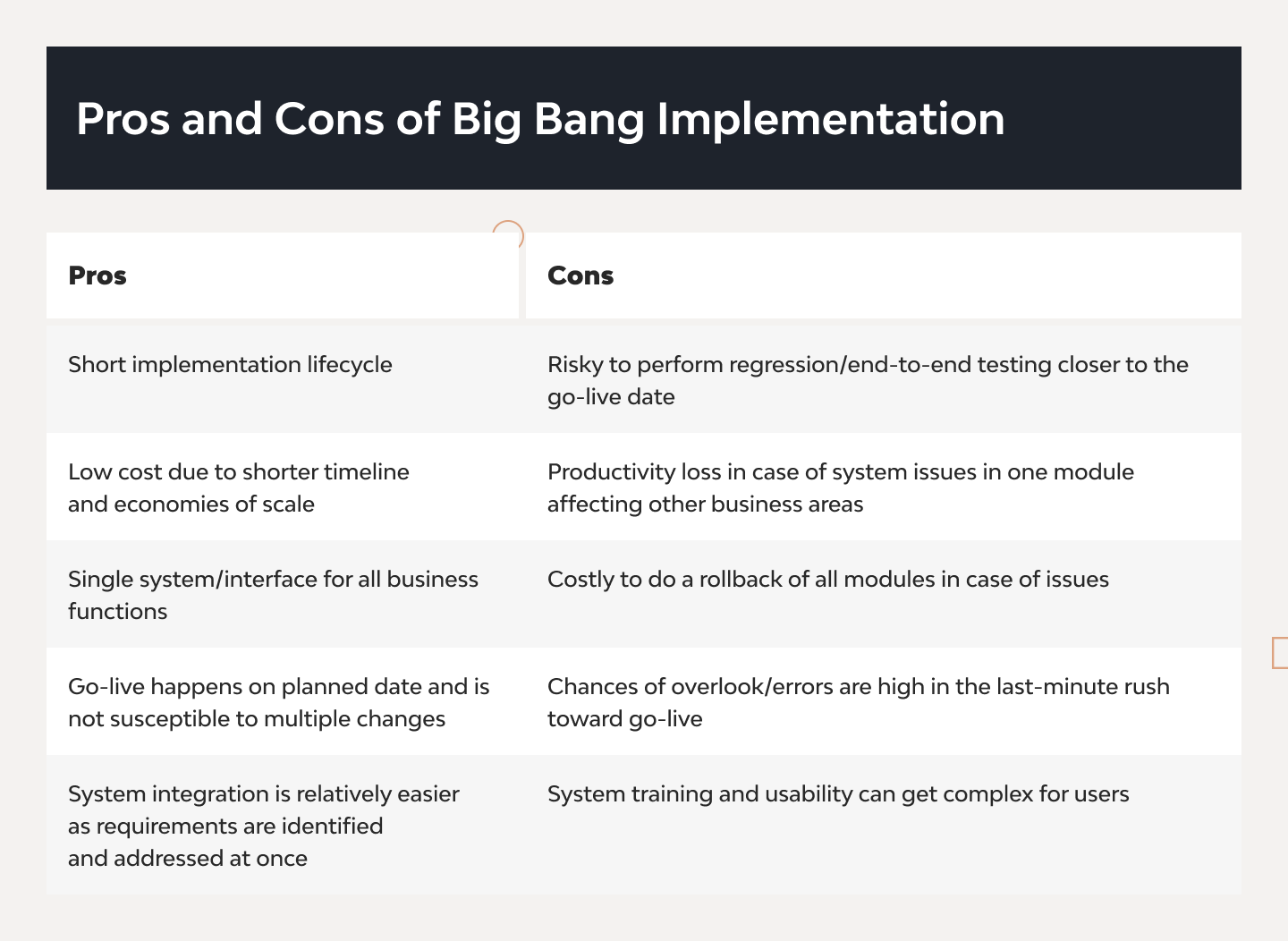
- Big Bang implementation – The Big Bang approach involves deploying the full system in a single go-live. It enables rapid EHR implementation with a large organization-wide rollout and is often used for accelerated EHR adoption when you have clear migration requirements. This is a fast, all-in-one-go method for shorter project timelines, standardized workflows, and no need to maintain two separate systems for months.
- Phased rollout – This approach enables department-by-department implementation: When you roll the system out in phases, you can gradually introduce the new EHR for different departments, specialties, clinics, or hospital locations. Incremental deployment allows you to stabilize each phase before moving to the next through controlled migration. This reduces implementation risk and empowers gradual user adoption of foreign EHRs, but takes more time.
- Parallel implementation – This method focuses on minimizing disruptions for clinics and employees thanks to parallel workflows. In this approach, the legacy and new EHR systems run simultaneously for a set period, while clinical and administrative specialists validate data, verify compliance, and meet standards. This uninterrupted access to patient data helps to mitigate risk and maintain business continuity during EHR implementation.
- Hybrid approach – A hybrid approach lets you combine implementation strategies, allowing you to handpick phases and tasks for a customized EHR rollout plan. For instance, you can leverage phased deployment of a new EHR across facilities while using a selective go-live for certain modules (e.g., an ePrescribing module can go live as soon as it’s ready and tested). This allows for a lower-risk, more flexible transition when it comes to workflows as critical as healthcare workflows.
EHR implementation roadmap
No matter the project approach you choose, implementing EHR will take three major stages:
- Pre-implementation – Thorough implementation planning helps achieve healthcare infrastructure readiness for the new EHR project. It should begin with an existing workflow assessment (to choose the most relevant features to implement), then prioritize careful vendor selection (for reliable technical execution) and dedicated compliance planning (for healthcare industry specifics).
- Implementation – The core stage of the entire project, where the required system integration(s) and initial EHR configuration take place. The implementation stage usually begins with data migration to a newly formed database, continues with integrations and tweaks, and ends with quality assurance (QA) and user acceptance testing (UAT) sprints.
- Post-implementation – The go-live support and continuous improvement of the implemented system are crucial for completing the efficient deployment of the new EHR. In particular, technical monitoring and system updates enable gradual performance optimization, while you can improve the EHR system further based on real user feedback.
Common EHR implementation challenges
Although the process has become highly standardized, there are challenges of EHR implementation that may require additional effort or skill, such as:
- Resistance to change – Understandably, clinicians can hesitate to replace familiar routines with new digital workflows. This user resistance can be overcome only through structured change management, early stakeholder engagement, transparent staff communication, and leadership support.
- Data migration risks – When migrating sensitive healthcare information, it’s crucial to maintain high data quality, which can be especially challenging with legacy records. You’ll need to map data before EHR integration, avoid migration errors, and ensure consistency through data validation.
- Legacy system integration – Enabling interoperability with legacy software is among the major EHR implementation challenges. You may require custom API connectivity in addition to HL7/FHIR integration and encryption between third-party systems.
- User adoption – Long-term efficiency of a new EHR depends on its usability and workflow adaptation for real clinicians. This, in turn, requires EHR-based staff training, user onboarding across all new features, and ongoing support for individual inquiries.
- Downtime during go-live – Maintaining business continuity and clinical system availability during the EHR implementation and go-live phases can be difficult. The EHR deployment planning should be complemented with contingency planning and extra technical support for potential disruptions.
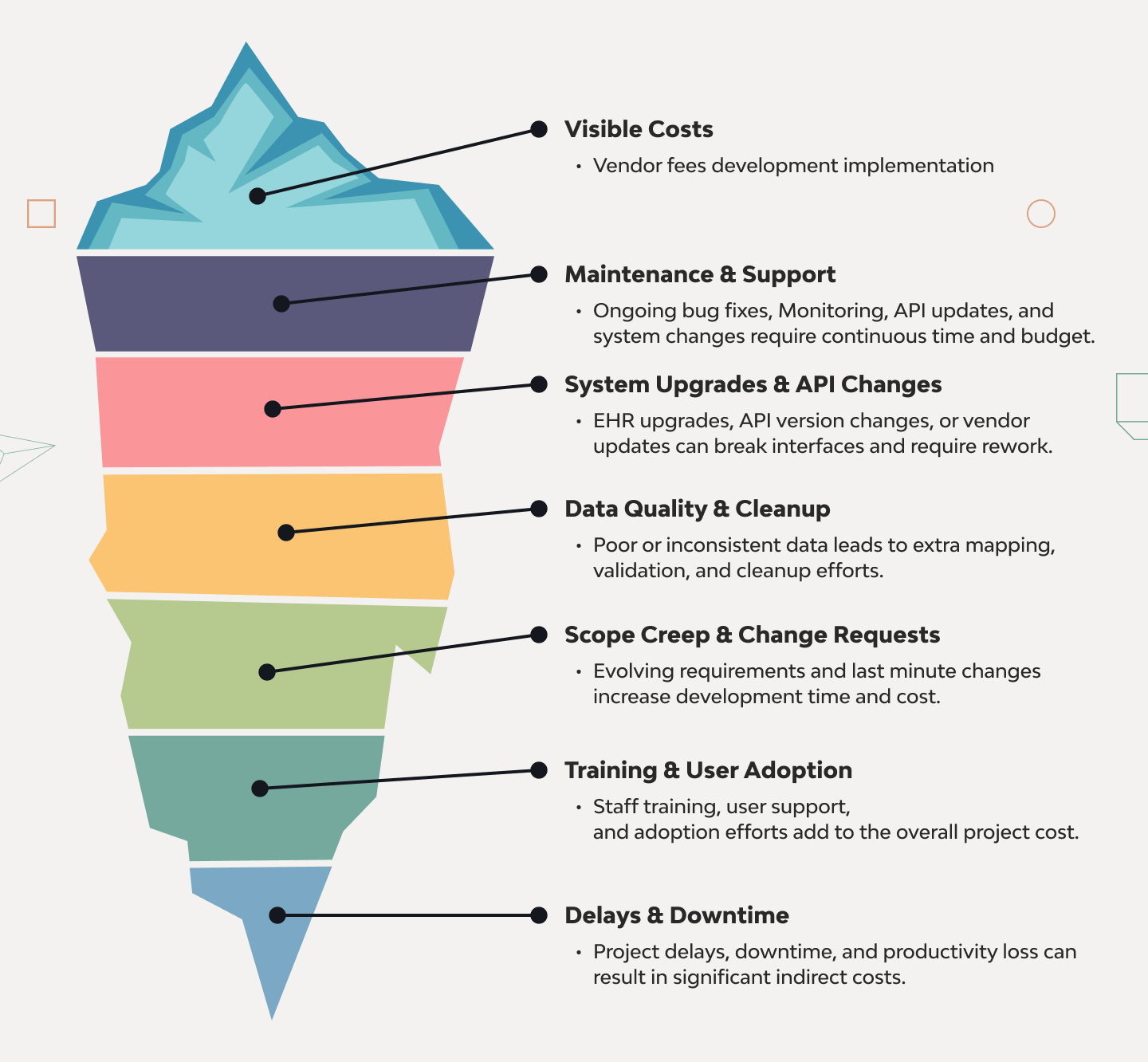
- Budget overruns– Scope creep and timeline delays can happen without efficient, managed resource allocation. It’s important to research the project scope and estimate implementation costs in detail.
- Security and compliance – Healthcare-dictated cybersecurity and HIPAA compliance may require separate focus. To keep the EHR compliant and safeguard patient info, you’ll need to enable granular access control, encrypt data, and keep audit logs.
- Workflow disruption – Disrupted clinical workflows can become a real issue and a source of productivity loss, especially when the project requires workflow redesign. To retain operational efficiency, you may need to plan and conduct additional process optimization.
EHR implementation best practices
EHR implementation is a multi-faceted process that can take many forms, but there are universal best practices that can help maximize efficiency and avoid pitfalls:
- Engage stakeholders early – For the EHR to reflect real clinical needs, involve clinicians and secure executive sponsorship before deployment begins. This stakeholder alignment helps keep EHR functionality relevant, gather end-user feedback, and gradually build cross-functional collaboration.
- Start with workflow analysis – To fine-tune the future EHR, conduct clinical workflow assessment and requirements gathering. This should include clinical process mapping, productivity gap analysis, and workflow optimization planning.
- Prioritize interoperability – Prepare the EHR system for HL7- and FHIR-compliant interoperability. This will require custom APIs, connection to the health information exchange (HIE), and other third-party integrations.
- Clean data before migration – Data cleansing before migration helps improve the quality and consistency of transferred information through duplicate removal, record validation, and data integrity verification. This will require thorough data mapping beforehand.
- Invest in staff training – Clinicians, administrators, and other specialists will carry the new EHR if they get proper training materials and system adoption support. Your investment in change management, role-based training, and user onboarding will pay off tenfold.
- Test thoroughly before deployment – Go-live should never be the first time users experience the system under real conditions. Conduct functional, integration, performance, security, and user acceptance testing to verify that workflows, interfaces, and infrastructure all work stably.
- Monitor KPIs after launch – An implemented EHR always has room for higher system performance, clinical efficiency, and patient satisfaction. You can do this by analyzing operational metrics and gaining insights to optimize the system and user adoption.
- Plan continuous improvements – Plan performance optimization and feature enhancements long term. Provide ongoing support and gather user feedback to plan the next best relevant software updates.
EHR implementation timeline
The EHR implementation timeline can vary based on many factors and conditions, including the scale of the use case, depth of customization, regulatory complexity, and more:
Typical project duration
Small practices (2-4 months)
Practices with small patient databases can do a basic EHR deployment with a standard configuration and limited integrations, with a rapid implementation timeline.
Clinics (4-8 months)
Medium-scale clinics may need custom workflows and careful patient data migration, which requires a slightly longer phased deployment, third-party integrations, and staff training.
Hospitals (8-18 months)
Hospitals and facilities with complex clinical workflows may need multi-department implementation, with enterprise integrations, extensive testing, and change management.
Enterprise healthcare organizations (12-24+ months)
Enterprise providers may require large-scale data migration, multi-site deployment, and interoperability, with optional infrastructure modernization and long-term rollout.
Factors affecting timeline
Organization size
The more users, departments, and healthcare facilities there are, the larger the implementation scope and the greater the need for stakeholder coordination.
Data volume
Costs are affected by migration complexity, including the volume of patient records, historical data formats, and the need to handle data cleansing and validation.
Number of integrations
More integrations require more costs—these can include HL7/FHIR interfaces, laboratory systems, PACS platforms, billing software, patient portals, and more.
Customization level
The depth of customization of clinical workflows, documentation templates, dashboards, user roles, and automation features will require a corresponding budget.
Compliance requirements
Achieving full HIPAA compliance implies work with security controls, audit trails, regulatory testing, and risk assessments, which can be extra costly.
EHR implementation cost
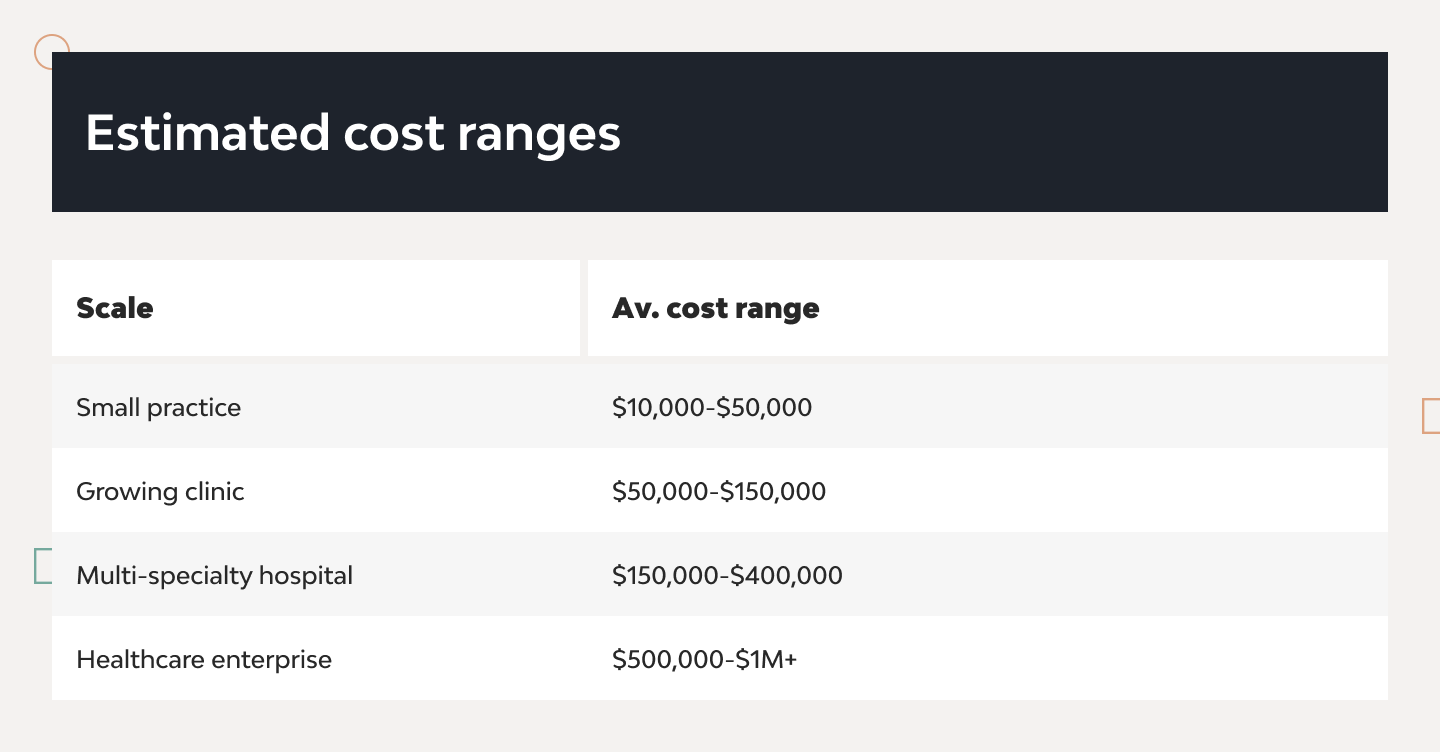
The final cost of the EHR implementation cycle can vary based on your project’s specifics and scale.
Major cost factors
- Software licensing – Depending on its scale, your future system may require commercial EHR licenses. To handle enterprise licensing, you’ll need to cover vendor costs, platform subscription fees, or user-based pricing for custom and tiered licenses.
- Infrastructure – Will the EHR system work from on-premises servers or via cloud infrastructure? These are different realms with different networking, storage, and cybersecurity requirements, which will dictate respective costs.
- Customization – The depth of workflow customization and EHR UI modifications can multiply costs in exchange for flexibility and potentially higher ROI. Namely, the more templates, dashboards, and specialty-specific features, the higher the cost.
- Integrations – The number of integrations is the next factor to affect EHR implementation cost. For an estimate, count the laboratory system, PACS/RIS, billing software, patient portal, and HL7/FHIR integration.
- Data migration – Legacy data migration requires time and skill; hence, the costs to cover all the man-hours. Particularly, patient records and related data need mapping, cleansing, conversion, and validation.
- Staff training – The importance of change management and onboarding for long-term EHR success can’t be overestimated. To enable that, you’ll need to invest in role-based training, EHR workshops, and materials.
- Ongoing maintenance – It’s important to always budget for post-implementation technical support and system optimization. Necessary investments include regular software updates, security patches, and continuous (ideally real-time) performance monitoring.
How DjangoStars helps with EHR implementation
DjangoStars can make your EHR implementation process easy, tailored, and focused on your specific facility and expectations—we offer:
- EHR consulting – We have certified experts ready to conduct workflow assessments and develop a unique implementation strategy. DjangoStars’ professionals assist with technology selection, compliance planning, and creation of a clear implementation roadmap.
- End-to-end EHR implementation – Our software engineers and designers specialize in full-cycle development, in-depth EHR customization, and environment-based deployment. We help with everything from project management and planning to solution architecture implementation to pre-go-live quality assurance.
- Data migration – We conduct legacy EHR migration and custom patient record migration of any scale, using any convenient approach (Big Bang, phased, parallel, or hybrid). Our specialists handle data mapping, initiate secure data transfer, and complete the migration with data validation.
- Healthcare integrations – We help integrate patient portals, billing platforms, laboratory systems, and any other add-ons to the base EHR system. Our software engineers know how to conduct efficient HL7/FHIR integration and set up stable EHR/EMR interoperability.
- Compliance and security – We have official certifications and extensive experience meeting HIPAA and GDPR requirements. We help achieve full regulatory compliance through data encryption, custom access controls, and audit trails at the EHR’s core.
- Post-go-live support – We help projects and systems reach their full potential through expert performance monitoring, ongoing maintenance, and sensitive user support. We also help optimize the EHR system after the implementation through user-focused software updates and scaling.
Hire experienced developers to build your next project with DjangoStars